LinkedIn posts and articles
52 long-form articles and 31 standalone posts — the short pieces written straight into the feed, with no article behind them — in one list, newest first. Every card links out to LinkedIn. Generated from posts.parquet and linkedin-posts.parquet. See the analytics for how far all of it reached.
LinkedIn Posts & Articles
 LinkedIn ↗articleAug 2, 2026
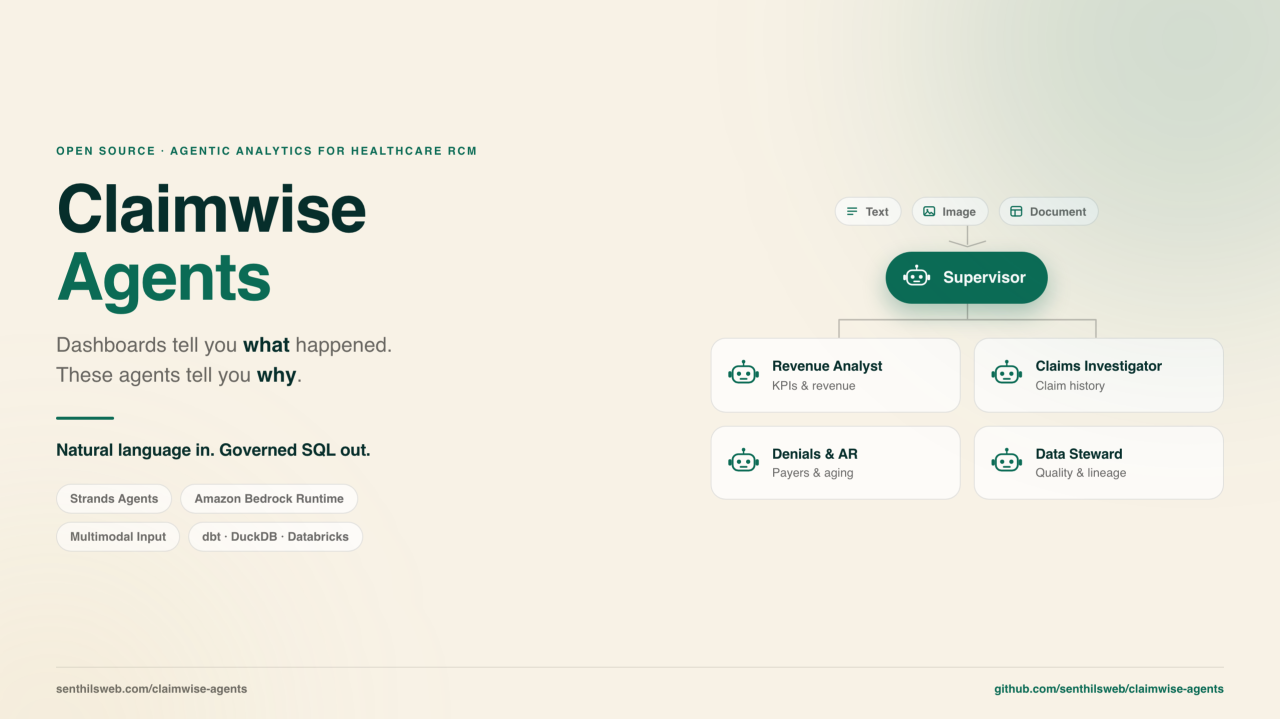
Agentic AI Analytics Without RAG — The Claimwise Revenue Copilot
Every healthcare billing team has the same routine. The revenue dashboard shows the numbers — billed, collected, denied.
 LinkedIn ↗articleJul 29, 2026
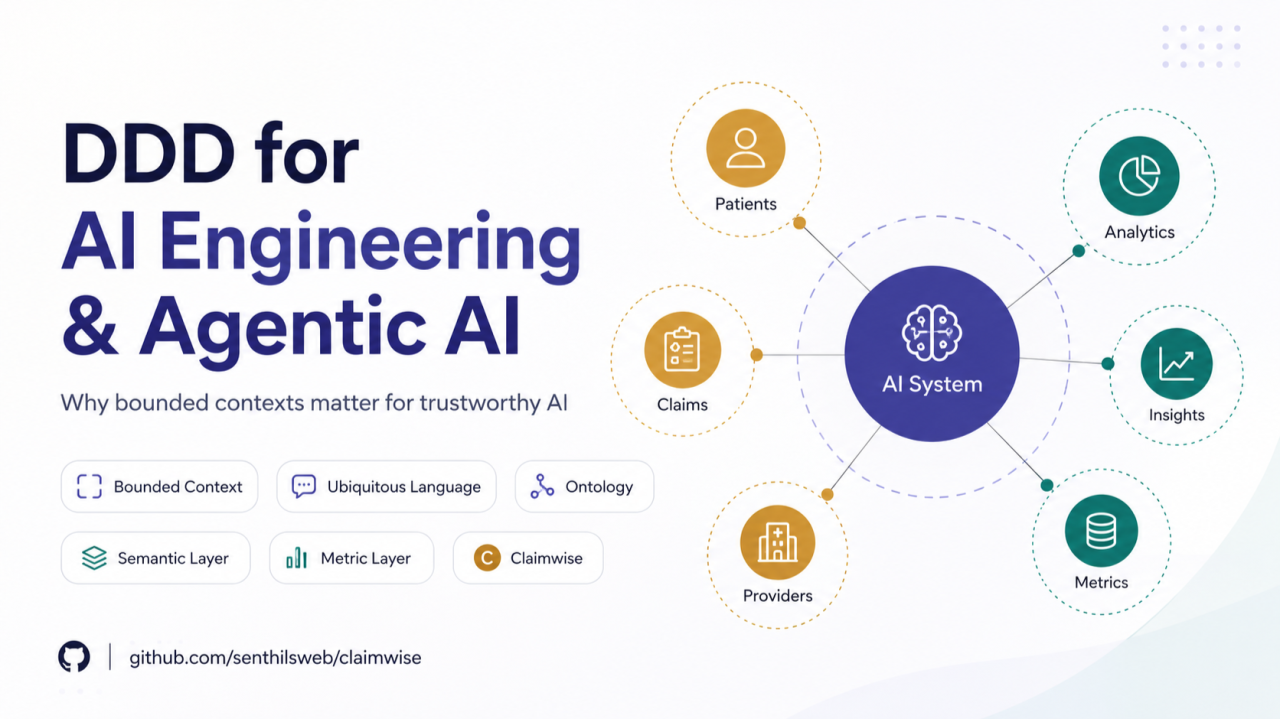
Domain-Driven Design for AI Engineering and Agentic AI
In 2003, Eric Evans introduced Domain-Driven Design (DDD). Its core idea is simple: Organize software around how the business works, using the language of the business and clear boundaries between different areas.
 LinkedIn ↗postJul 26, 2026
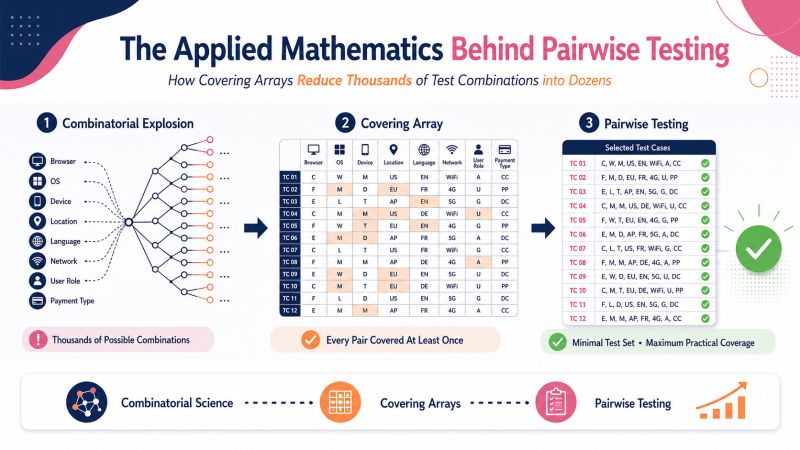
Pairwise Testing deserves more attention—especially now
The applied mathematics behind it offers a practical answer to a persistent engineering problem: How do we evaluate a complex system systematically when exhaustive testing is too…
 LinkedIn ↗postJul 26, 2026
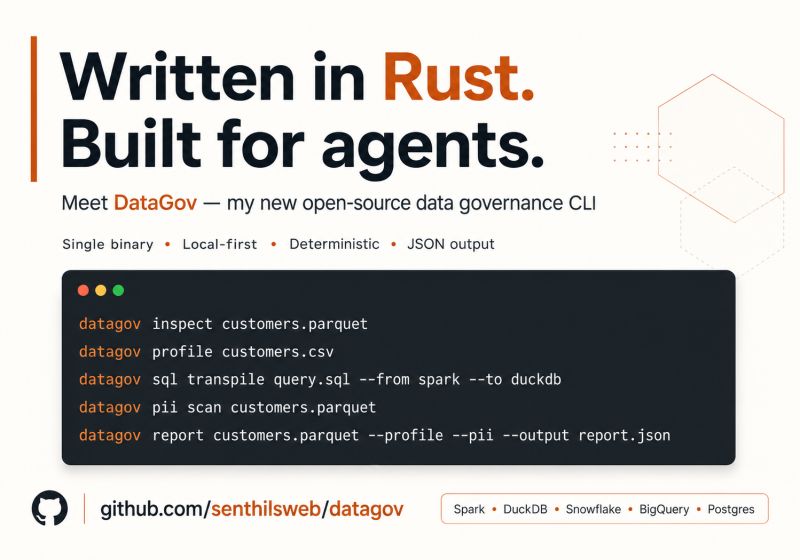
Meet DataGov — my new open-source data governance CLI
Written in Rust. Built for agents. The goal is simple: one binary, with no Python, Java, Node.js, or Docker dependency, that both engineers and AI agents can run reliably. DataGov…
 LinkedIn ↗articleJul 26, 2026
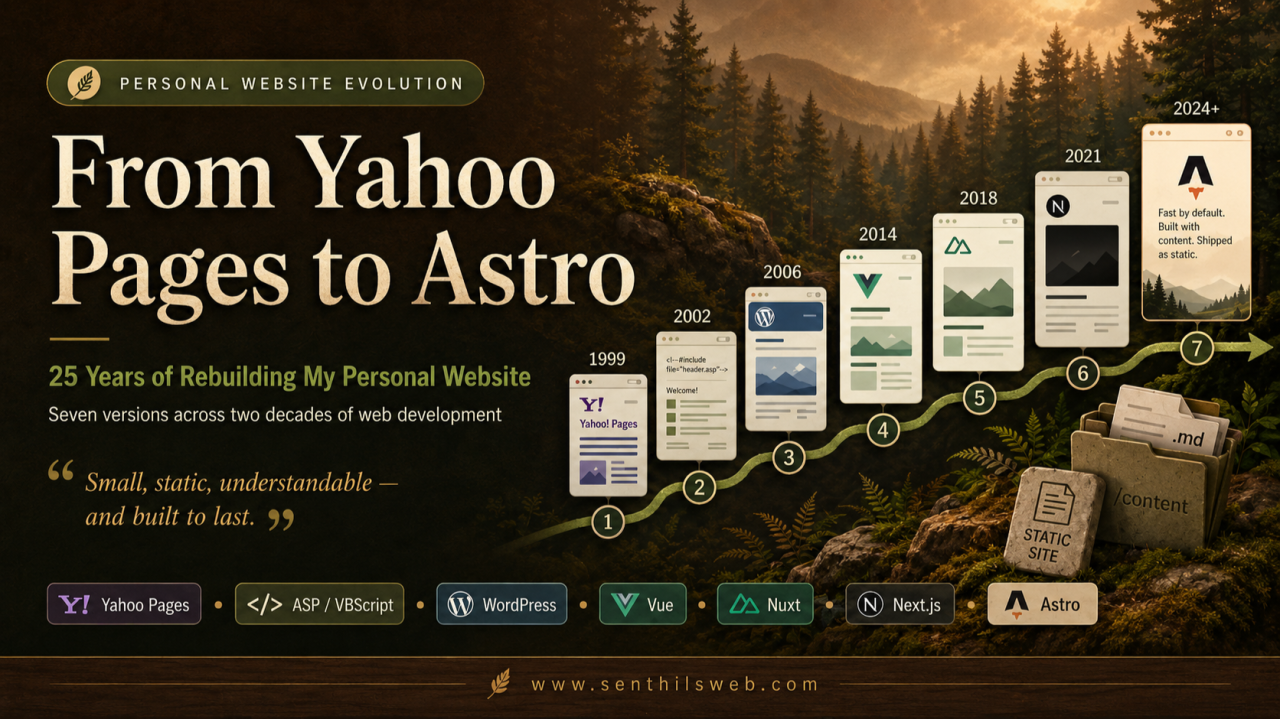
From Yahoo Pages to Astro: 25 Years of Rebuilding My Personal Website
I created my first personal website in 1999 using Yahoo personal pages. Over the years, I rebuilt it using different technologies: Each version matched what I needed and what I was learning at that time.
 LinkedIn ↗articleJul 25, 2026
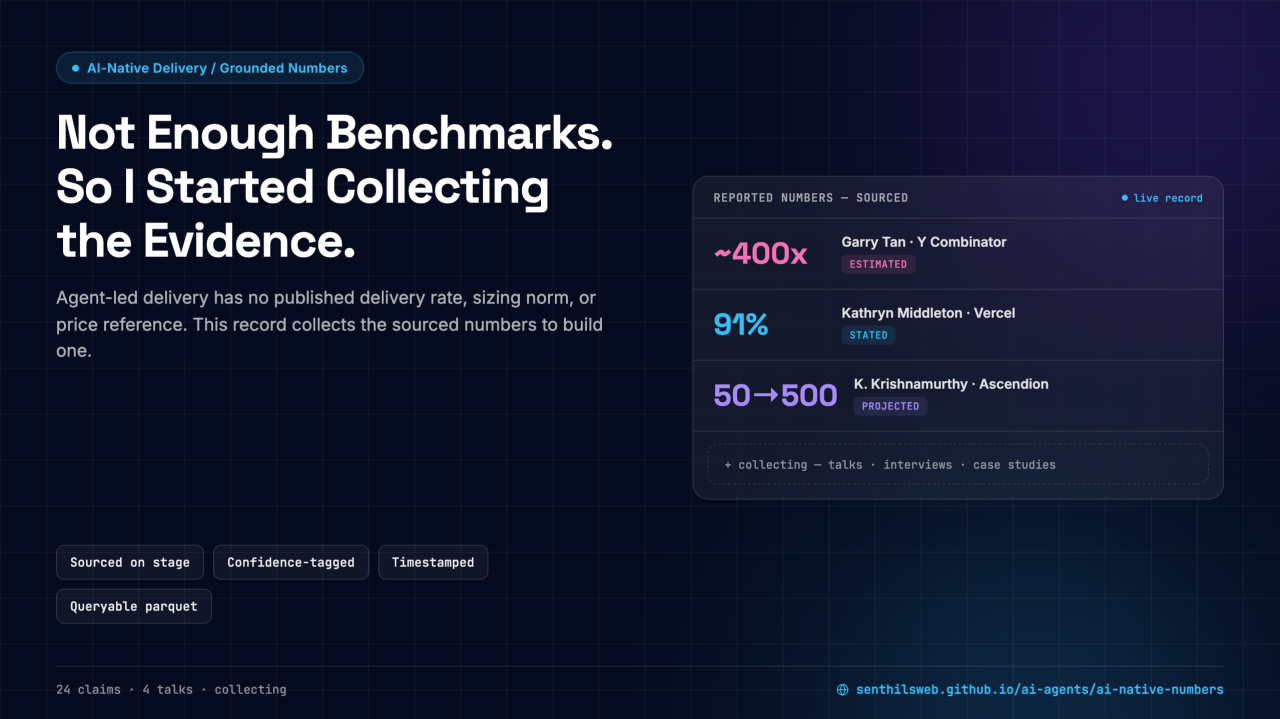
Not Enough Benchmarks for AI-Native Delivery
Over the past few days, I have been exploring a connected problem. AI engineering practices are evolving rapidly, but estimation, pricing, productivity measurement, and value realization are still catching up.
 LinkedIn ↗postJul 23, 2026
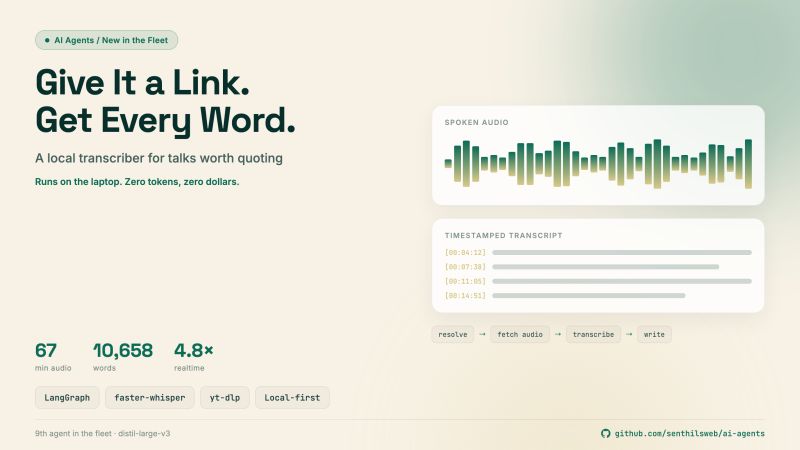
Introducing the latest addition to my agent fleet
the youtube-transcriber, now number nine. What it does: Simply provide a YouTube link, and it returns the full spoken transcript of the audio, not just the captions. This means…
The landscape of agent frameworks is rapidly evolving, with new names appearing…
LinkedIn ↗postJul 23, 2026The landscape of agent frameworks is rapidly evolving, with new names appearing…
every few weeks: OpenAI Agents SDK, LangGraph, CrewAI, PydanticAI, LangChain, Claude agents, and more. Despite the varying terminologies and abstractions, the underlying execution…
 LinkedIn ↗postJul 23, 2026
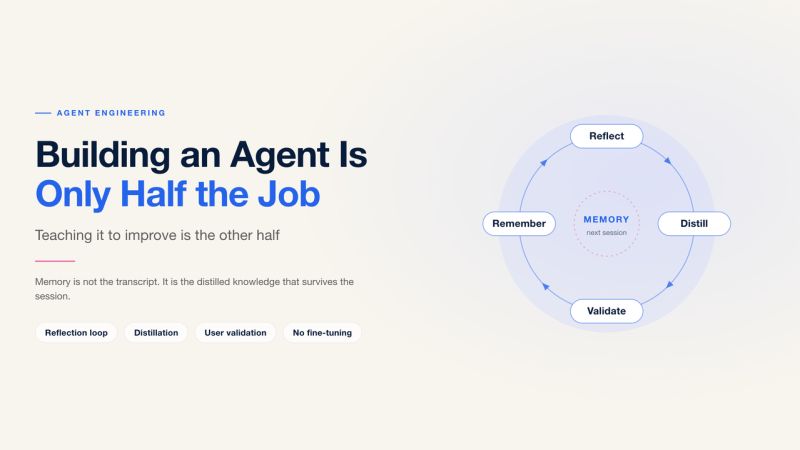
Last week, I requested my linkedin-cover-image agent to utilize a darker…
palette for a privacy article, and it executed the task well. However, the next day, when I opened a new session, I found myself repeating the same request. The agent was not at…
 LinkedIn ↗postJul 22, 2026
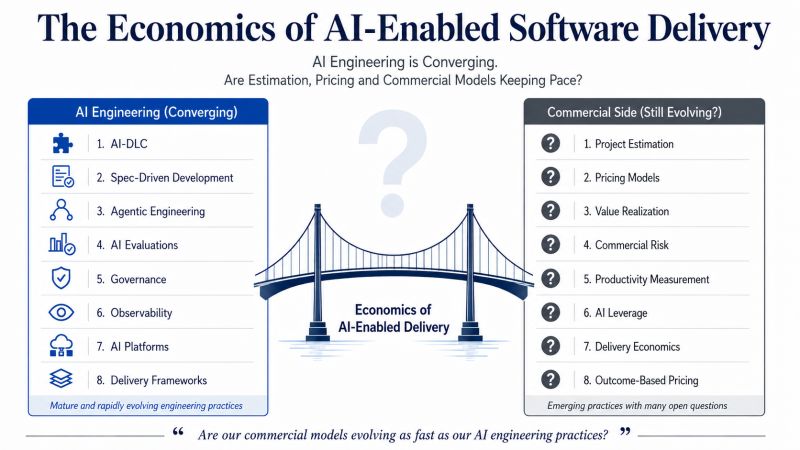
Every week, new ideas emerge around AI-SDLC, spec-driven development, agentic…
engineering, AI evaluations, governance, observability, and AI-native delivery platforms. The engineering side is gradually converging around common practices, methodologies, and…
 LinkedIn ↗articleJul 21, 2026
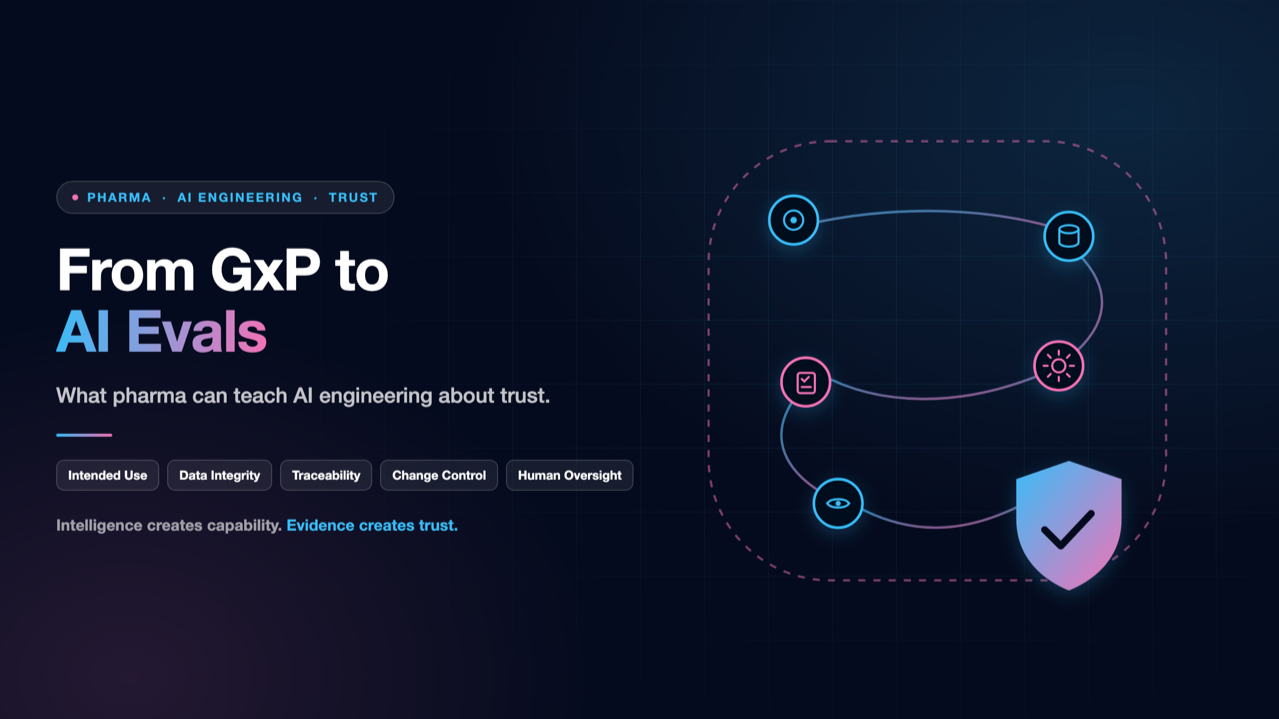
What Pharma Can Teach AI Engineering About Trust
AI engineering is moving very fast. Every week, we hear about new models, new agent development frameworks, Vector databases, RAG pipelines, MCP servers, Connectors & Tools, evaluation frameworks, and automation platforms.
 LinkedIn ↗articleJul 21, 2026
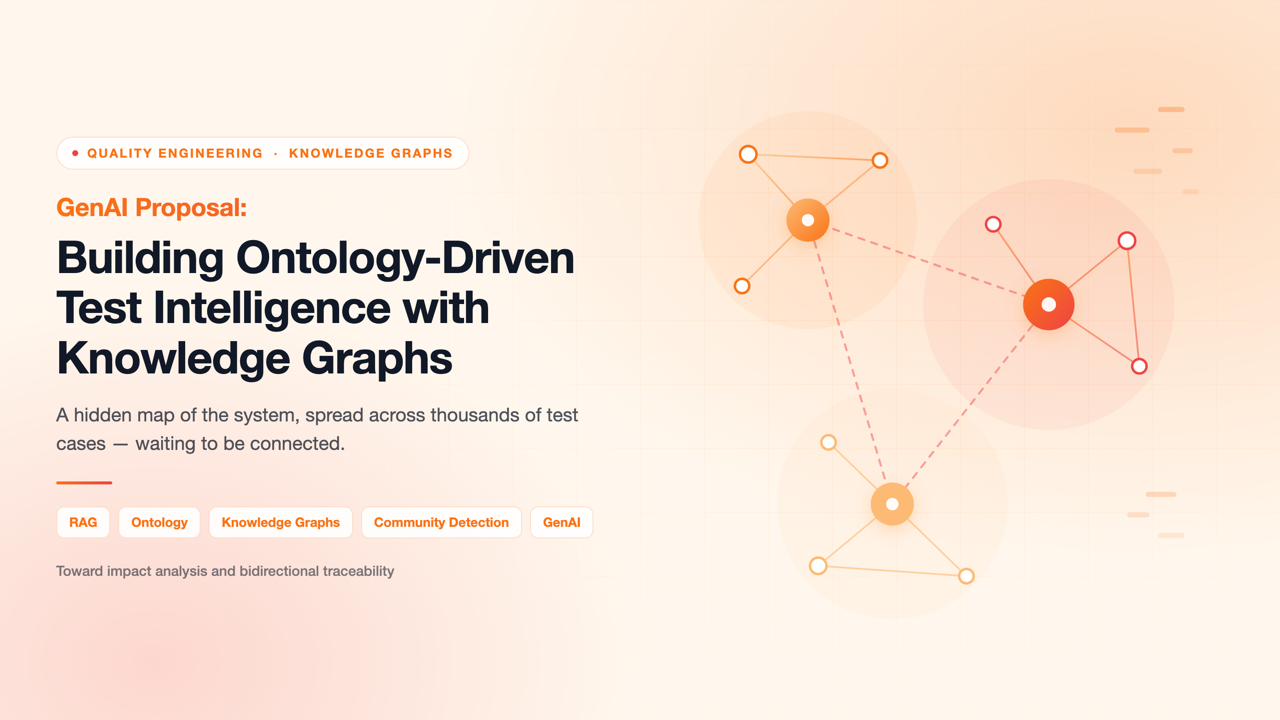
Beyond RAG: Building Ontology-Driven Test Intelligence with Knowledge Graphs
Across decades of working on large enterprise products, multiple projects, and top-tier engineering teams, I have rarely seen a complete and dependable solution for two persistent problems: Impact analysis and bidirectional traceability. This is especially difficult for enterprise products that have
 LinkedIn ↗articleJul 20, 2026
OpenLineage Viewer: Databricks-Style Lineage for Local dbt, in Pure HTML
This is a sequel to Last week's post on the Claimwise dataset and dbt pipeline. Last week I shared the Claimwise dataset and the dbt pipeline behind it.
 LinkedIn ↗postJul 19, 2026
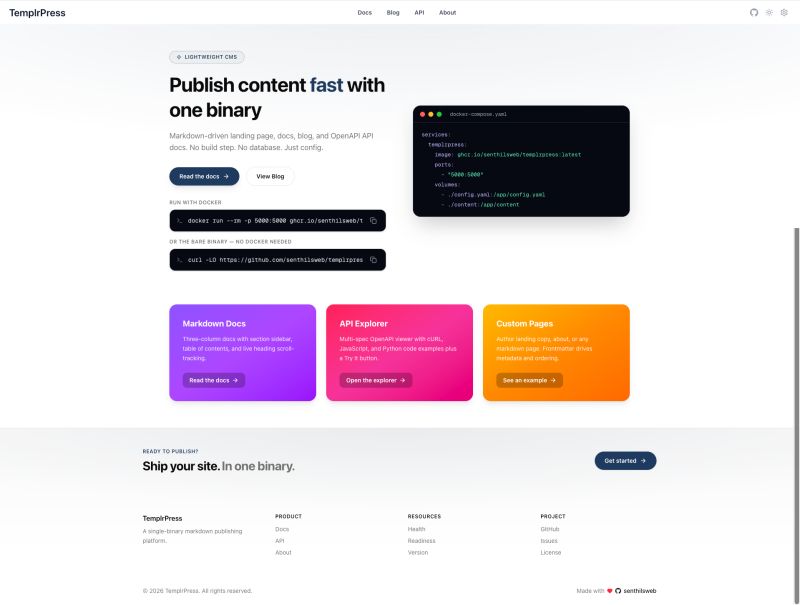
I am setting up a production line for my open-source work — and the workers on…
it are AI agents. Every project needs a website, docs, a blog, and an API reference. I did not want to hand-build that each time, and I do not want my agents to either.…
 LinkedIn ↗articleJul 18, 2026
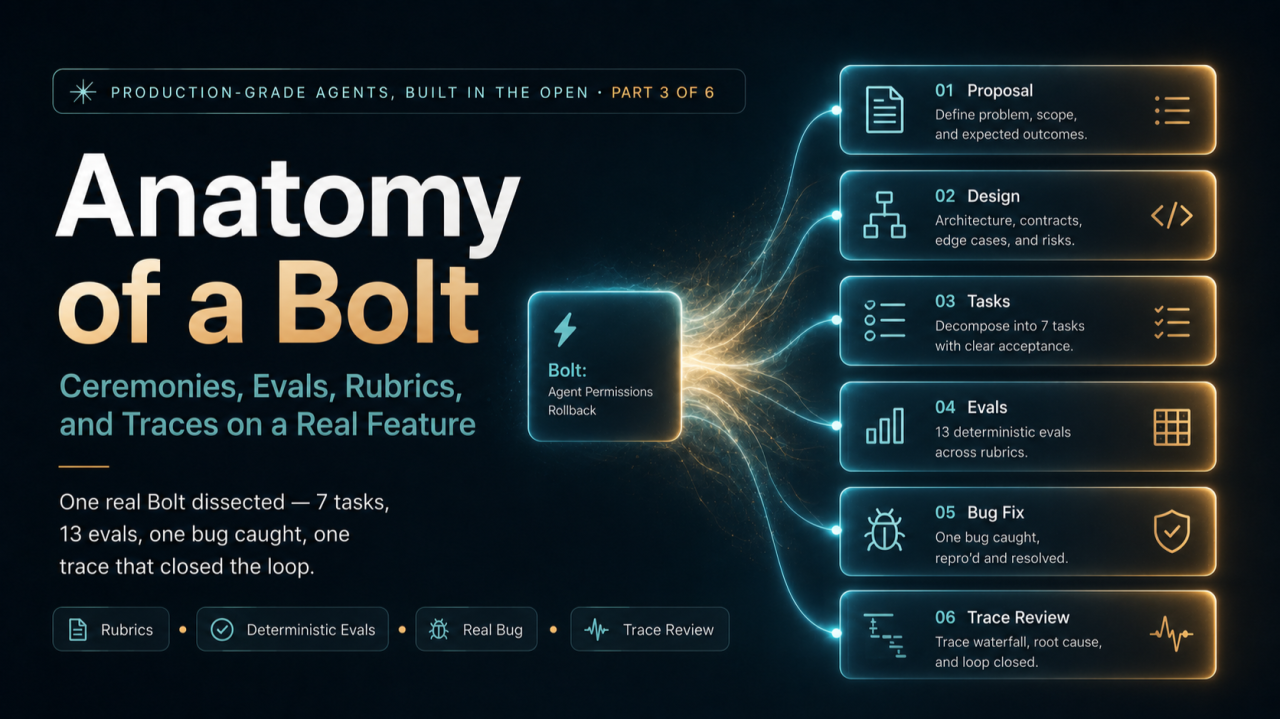
Anatomy of a Bolt — Ceremonies, Evals, Rubrics, and Traces on a Real Feature
Production-Grade Agents, Built in the Open — Part 3 of 6 One Core, Four Doors Specs, Not Vibes Anatomy of a Bolt (this article) The LLM Never Scores Stop Burning Tokens on Grep AI Did the Typing Part 2 gave you the totals: 11 Bolts, 62 tasks, 135 evals. This part picks one real Bolt — the cover-lett
 LinkedIn ↗articleJul 18, 2026
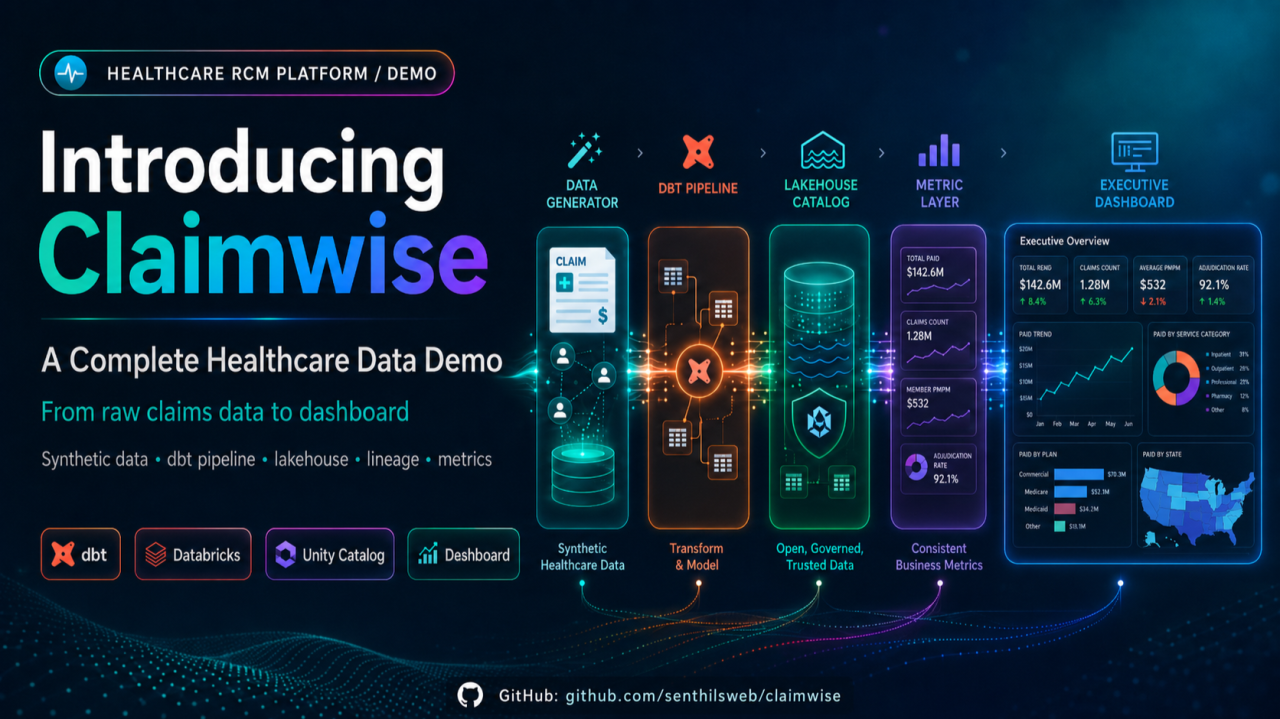
Introducing Claimwise — End-to-End Data Lakehouse Storytelling with dbt, Databricks/Snowflake, and Unity Catalog, From Raw Data to Dashboard
Claimwise is a healthcare Revenue Cycle Management (RCM) demo I built — the billing back office of a fictitious hospital network. The hospital is not real, but everything running behind it is real: synthetic patients and claims, all of it sits in one repo, and you can run it on your laptop.
 LinkedIn ↗postJul 16, 2026
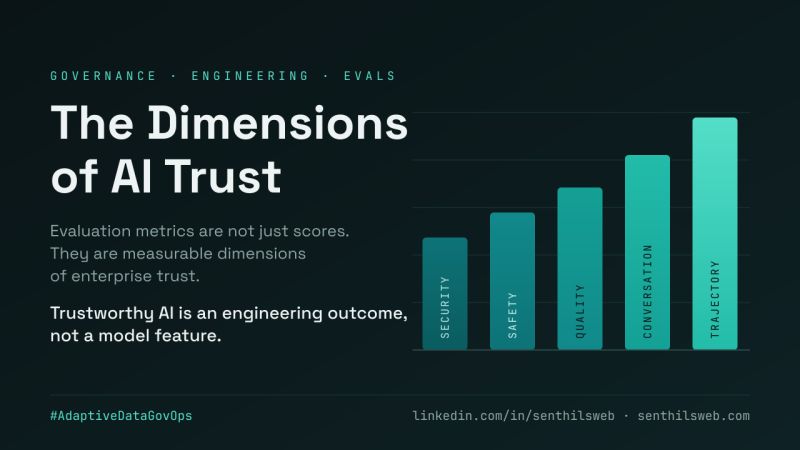
Recently, while exploring modern AI evaluation frameworks, I had a realization
Initially, the categories seemed like a collection of technical metrics—valuable for testing model behavior, comparing outputs, and enhancing performance. However, the deeper I…
 LinkedIn ↗articleJul 15, 2026
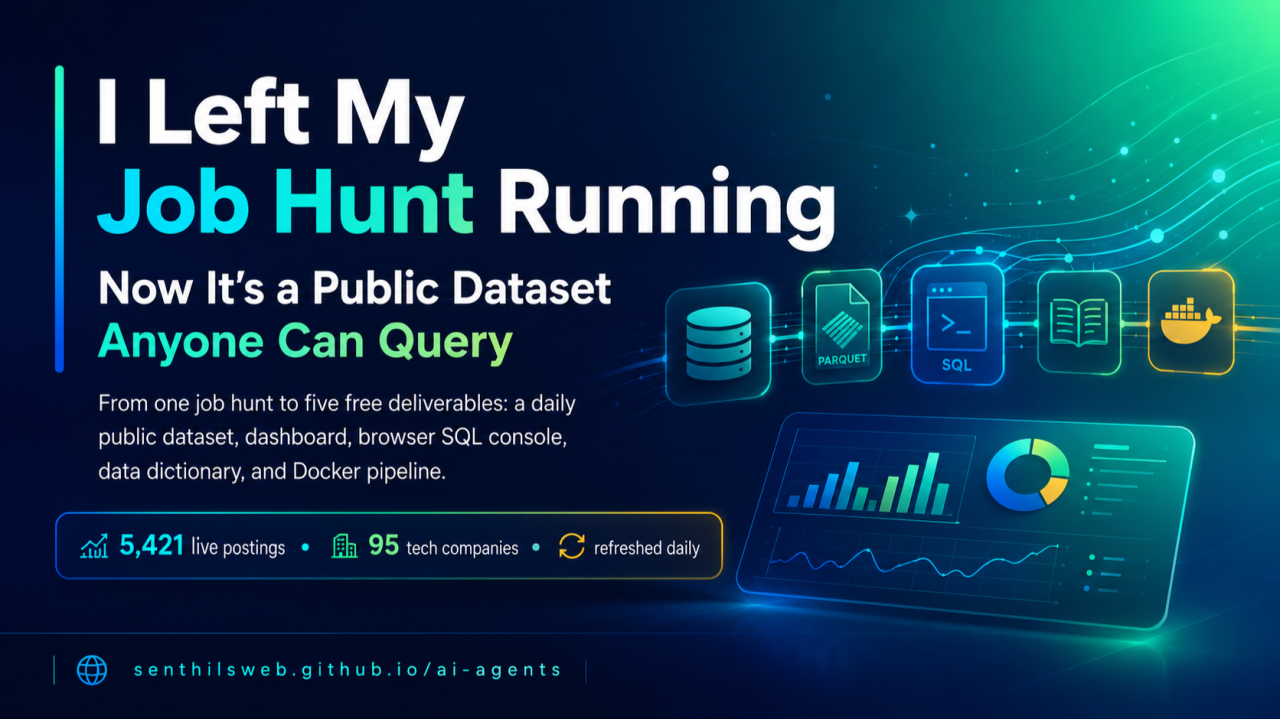
I Left My Job Hunt Running — Now It's a Public Dataset Anyone Can Query
Dashboard: senthilsweb.github.
 LinkedIn ↗articleJul 14, 2026
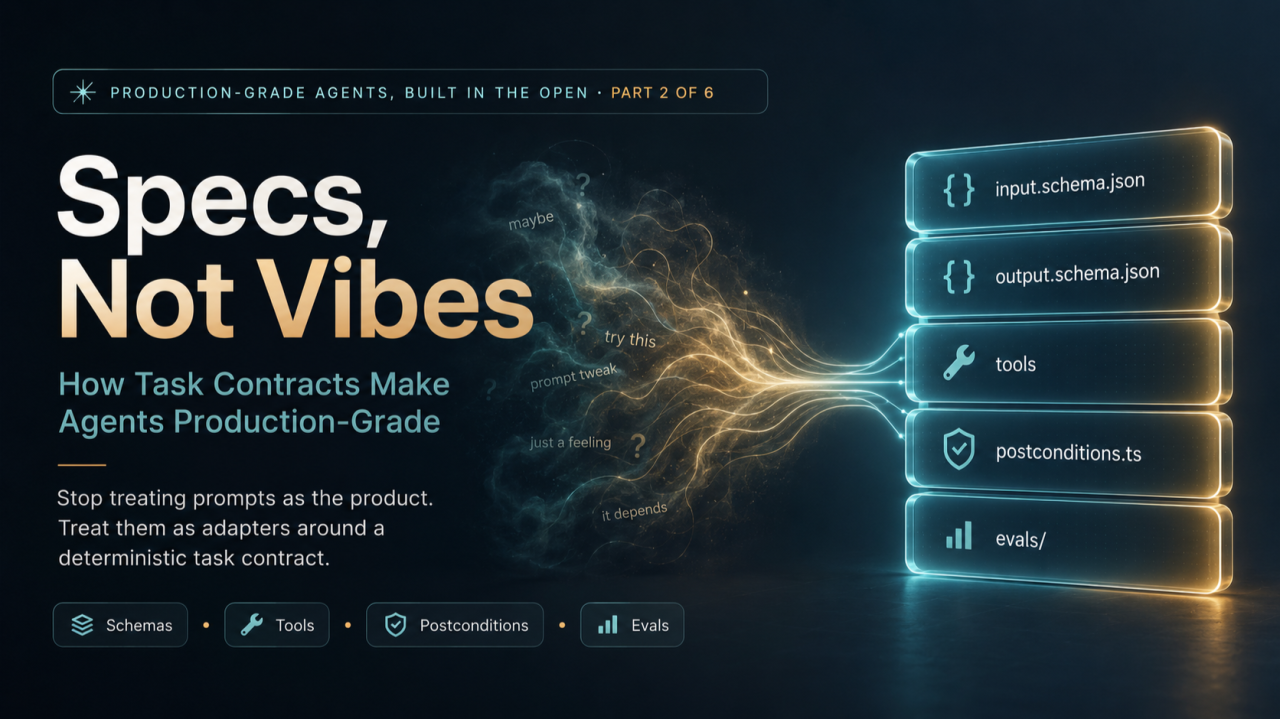
Specs, Not Vibes — Building a Production Agent with AI-DLC
Production-Grade Agents, Built in the Open — Part 2 of 6 One Core, Four Doors Specs, Not Vibes (this article) Anatomy of a Bolt The LLM Never Scores Stop Burning Tokens on Grep AI Did the Typing The agent from Part 1 was built through 62 tasks and 135 evals across 11 Bolts — every one of them writte
 LinkedIn ↗articleJul 13, 2026
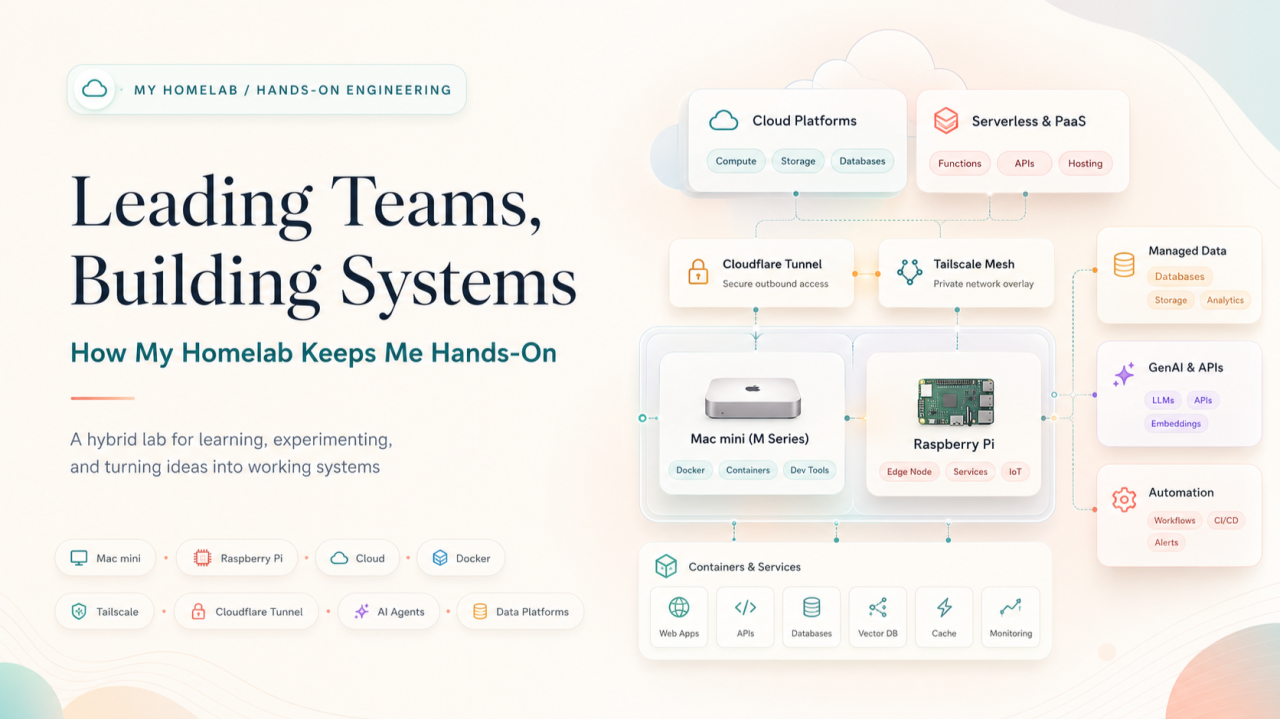
Leading Teams, Building Systems: How My Homelab Keeps Me Hands-On
Today, I am sharing my homelab infrastructure—my small personal data centre where many of my ideas and projects have taken shape. After 26 years in technology, my work naturally spans architecture, engineering leadership, and management, but I have never wanted to move away from hands-on engineering
 LinkedIn ↗articleJul 13, 2026
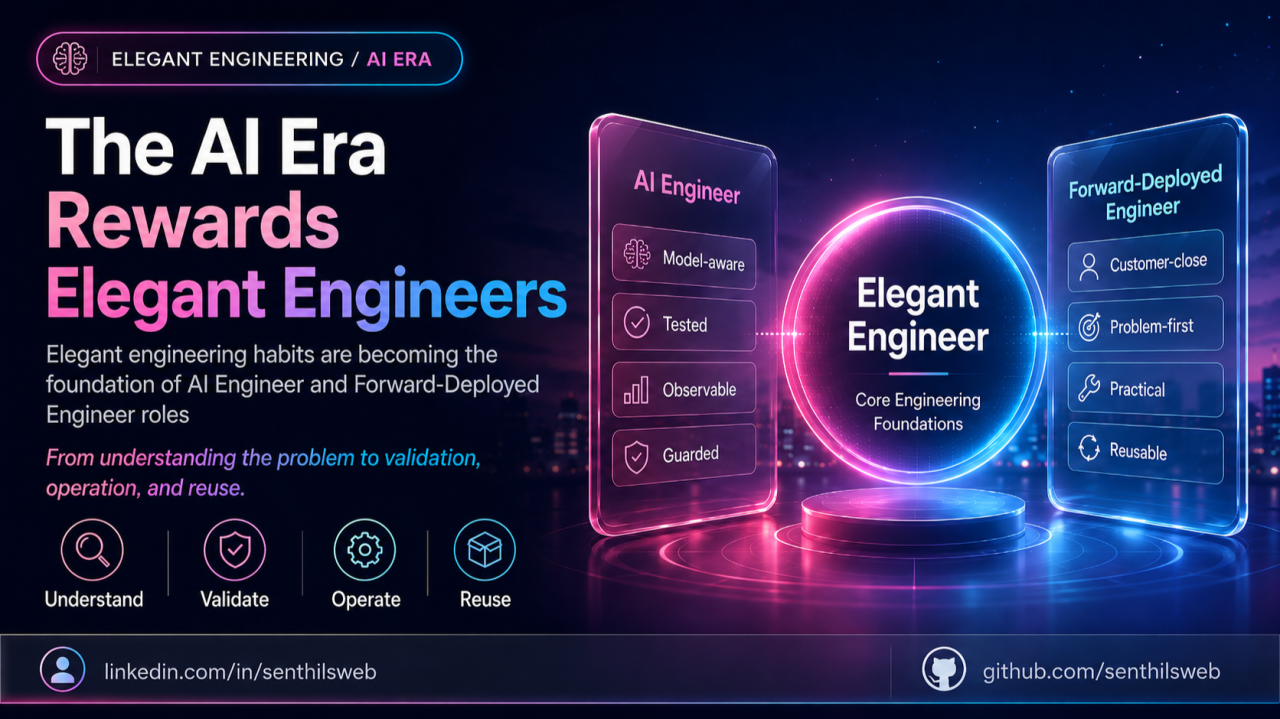
My View: The AI Era Is Distilling and Rewarding Elegant Engineers
The titles AI Engineer and Forward-Deployed Engineer may sound new, but many of the qualities behind them are not. In my view, an elegant software engineer may already possess nearly 70–75% of the foundation needed for these roles.
 LinkedIn ↗articleJul 12, 2026
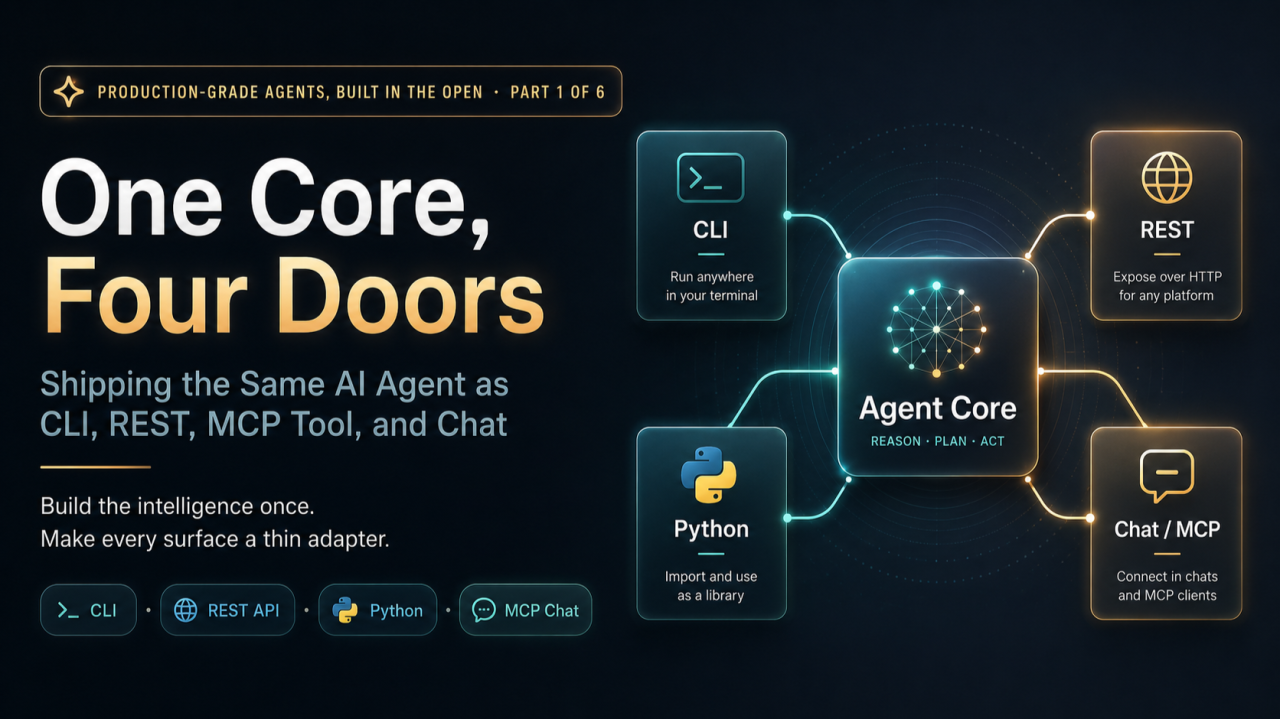
One Core, Four Doors — Shipping the Same AI Agent as CLI, REST, MCP Tool, and Chat
Production-Grade Agents, Built in the Open — Part 1 of 6 One Core, Four Doors (this article) Specs, Not Vibes Anatomy of a Bolt The LLM Never Scores Stop Burning Tokens on Grep AI Did the Typing I built an AI agent that compares a resume against job postings and returns evidence-grounded, determinis
 LinkedIn ↗articleJul 7, 2026
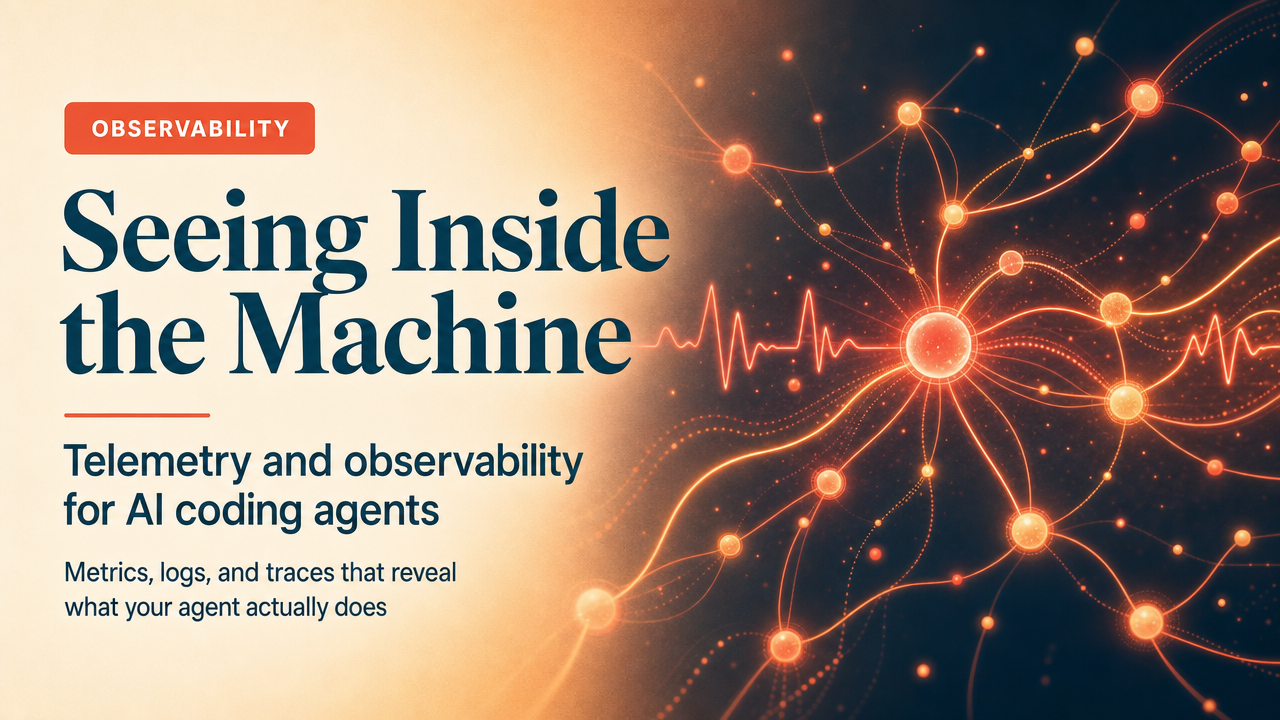
Telemetry and Observability for Claude Code
Where this started? In my previous article, This Cover Image Was Not Designed. It Was Orchestrated, I shared a fully working agent — a LinkedIn cover image generator built on Vercel's Eve agentic framework.
 LinkedIn ↗articleJul 5, 2026
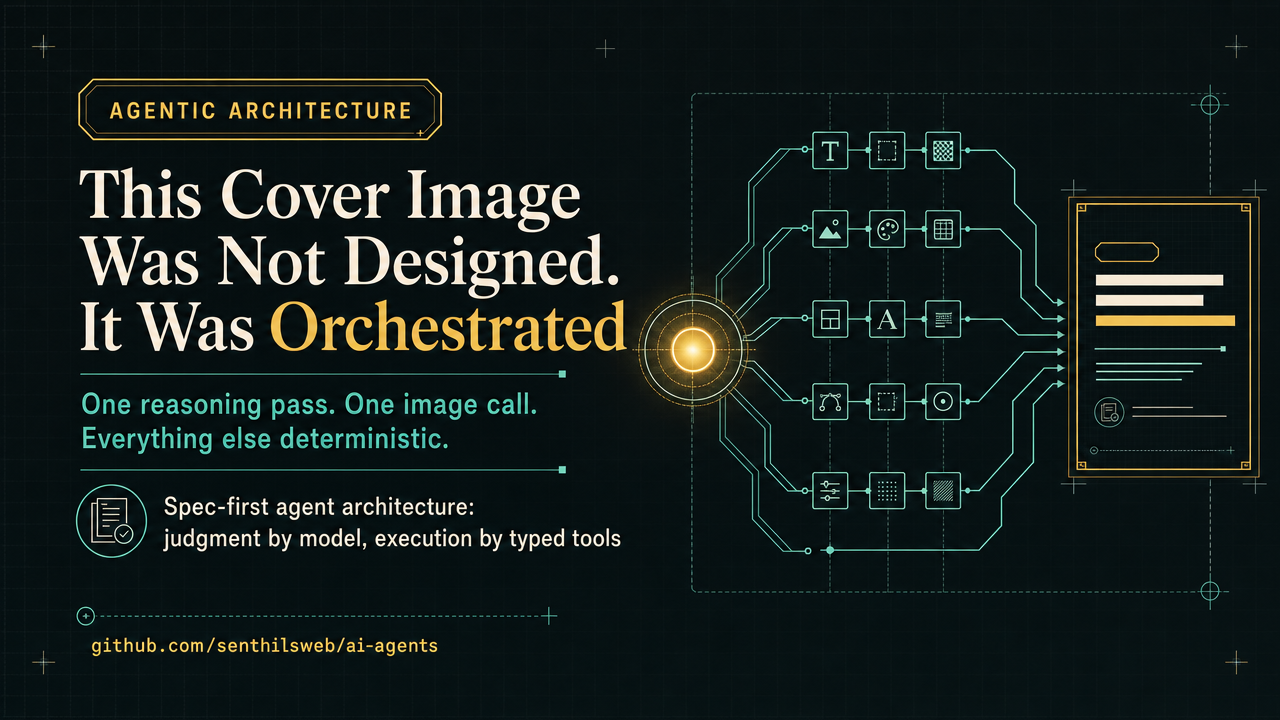
This Cover Image Was Not Designed. It Was Orchestrated
Every cover image on my recent articles — including this one — was generated by a small open-source agent I built using vercel eve framework in TypeScript. One reasoning pass, one image call, everything else deterministic The phone call that triggered this article Yesterday my article "Job Hunting I
 LinkedIn ↗articleJul 3, 2026
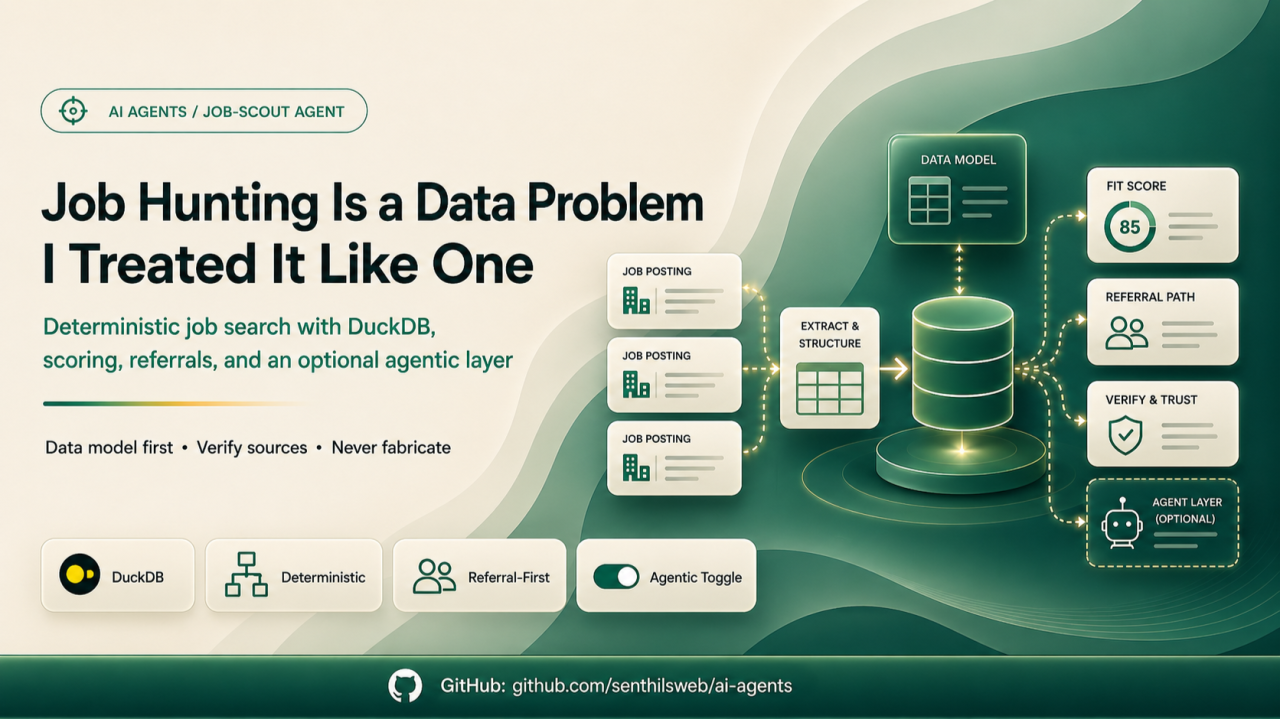
Job Hunting Is a Data Problem. I Treated It Like One.
Every job posting is a row of data. Recently I had reason to read a lot of them, and within two days I noticed something familiar.
Why pay for frontier models when NVIDIA hosts Nemotron 3 Ultra for free
LinkedIn ↗postJun 12, 2026Why pay for frontier models when NVIDIA hosts Nemotron 3 Ultra for free
I plugged it into GitHub Copilot CLI in under a minute — swipe through the cheatsheet to set it up yourself. 👇 #AI #GitHubCopilot #NVIDIA #Nemotron #DeveloperTools …more Your…
Adaptive DataGovOps — summarized on one page
LinkedIn ↗postMay 31, 2026Adaptive DataGovOps — summarized on one page
While "adaptive" may sound simple, putting it into practice is challenging. Here’s the playbook: 12 practices for governing data in the GenAI era, organized into 4 phases — Talk,…
 LinkedIn ↗postMay 31, 2026
Data governance requires an adaptive operating model, as it is not a…
one-size-fits-all solution. Throughout our work on data discovery, classification, and governance challenges, we consistently encountered the same issue: each organization has…
 LinkedIn ↗articleMay 25, 2026
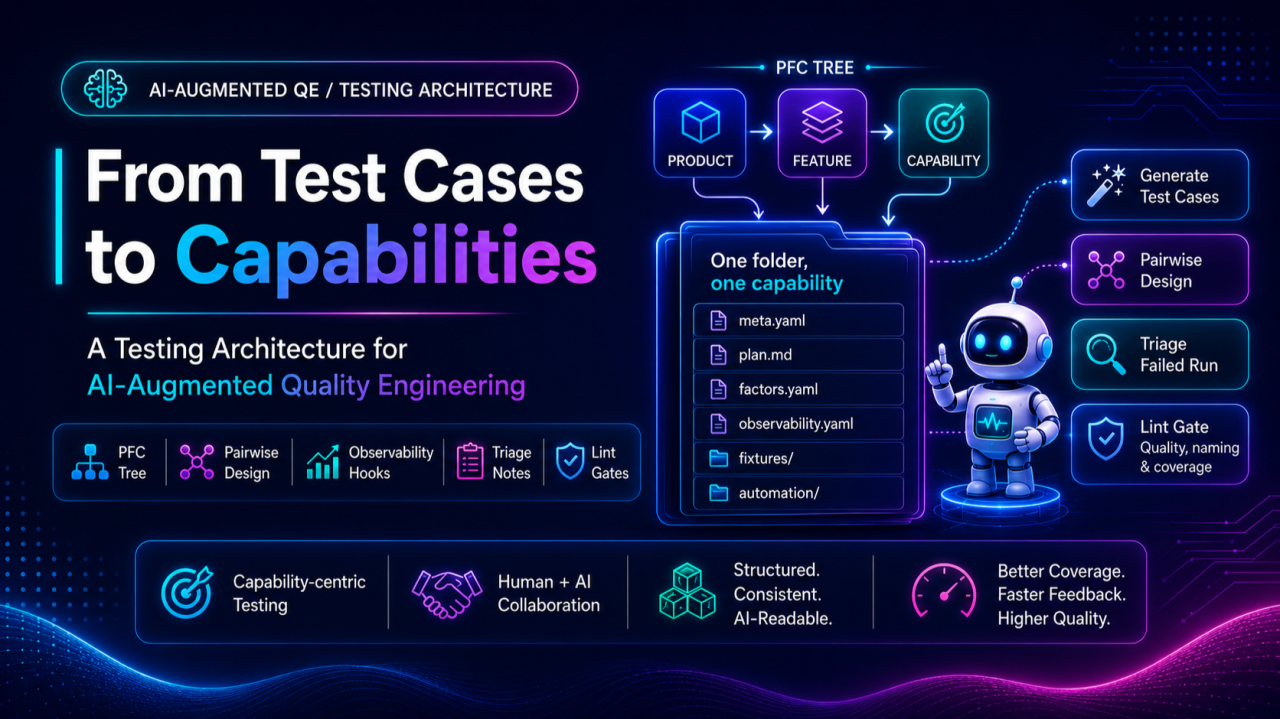
From Test Cases to Capabilities: A Testing Architecture for Agentic AI-Augmented Quality Engineering
At Pentaho, we did not "add AI" to Quality Engineering (QE). We are re-architecting QE so AI can actually do the work — by replacing the scattered test plan with capability folders that every skill (drafting, pairwise design, triage, lint) reads and writes the same files a human reviewer would.
I have modernized my open-source Privacy Shield project into a simple,…
LinkedIn ↗postMay 3, 2026I have modernized my open-source Privacy Shield project into a simple,…
local-first Data Loss Prevention (DLP) workflow designed for everyday text use cases. This workflow assists in detecting Personally Identifiable Information (PII), anonymizing…
 LinkedIn ↗articleMay 1, 2026
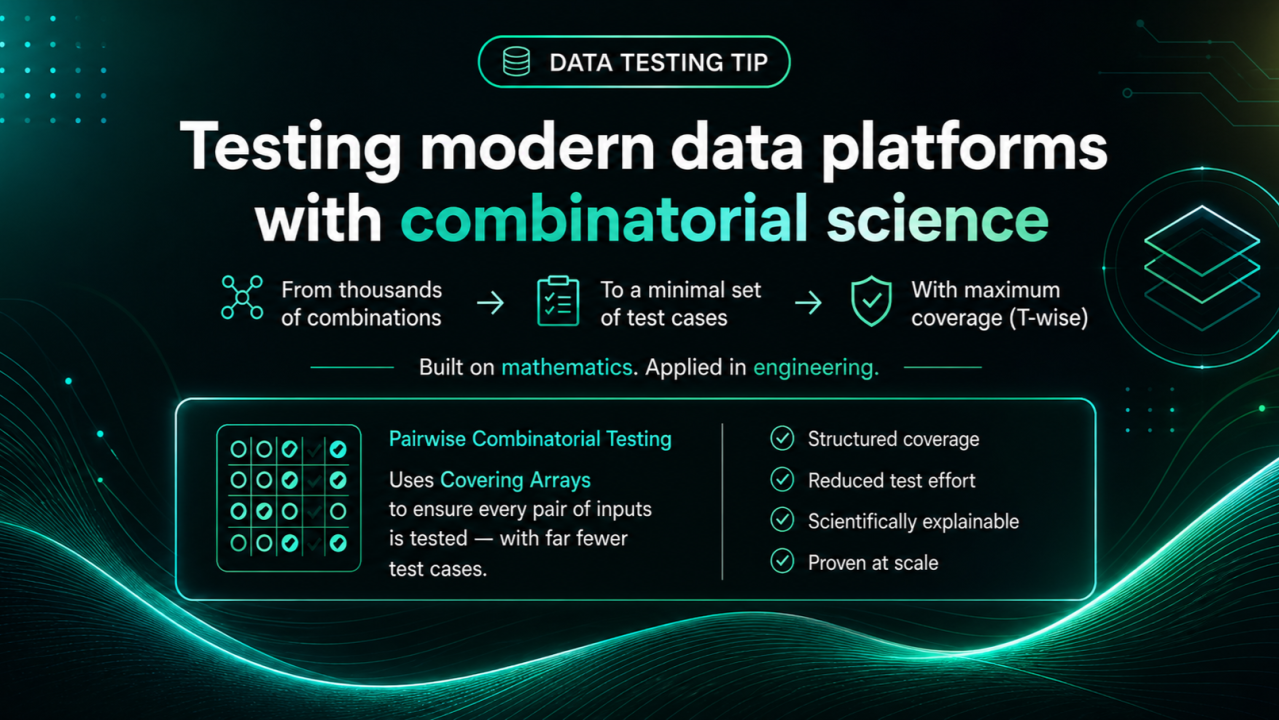
Applying combinatorial science and discrete mathematics to data-platform engineering and testing
When a product spans many data sources, several deployment targets, multiple connection types, and a wide set of overlapping capabilities, you don't have a test plan — you have a math problem. Here is how we apply combinatorial science at Pentaho to keep release confidence high without burning the t
 LinkedIn ↗postApr 27, 2026
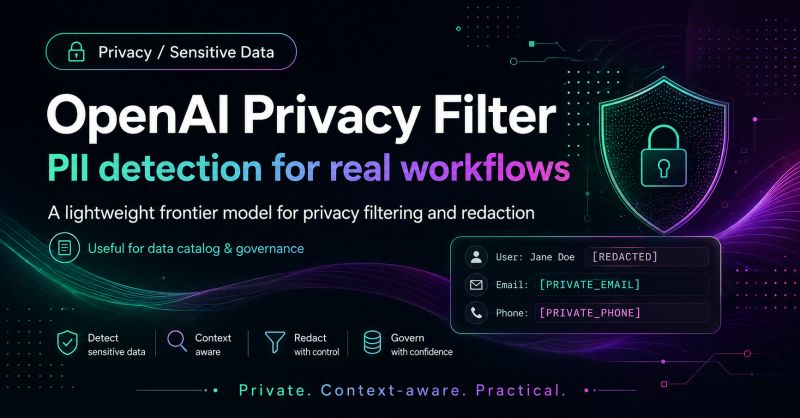
OpenAI recently (Apr 22, 2026) released Privacy Filter, a lightweight frontier…
model designed for detecting and redacting personally identifiable information (PII) in text. Read the post @ https:// https://lnkd.in/eqSaUNYV A key feature of Privacy Filter is…
 LinkedIn ↗postApr 25, 2026
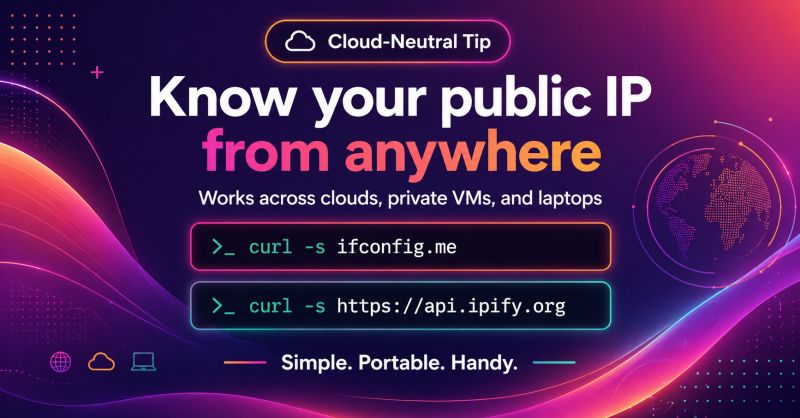
Quick cloud-neutral tip to know your public IP from any terminal
commands: curl -s ifconfig.me (or) curl -s https://api.ipify.org Simple, portable, and handy across clouds, private VMs, laptops, and containers. #whatsmyip #DevOps #routerip…
 LinkedIn ↗postApr 25, 2026
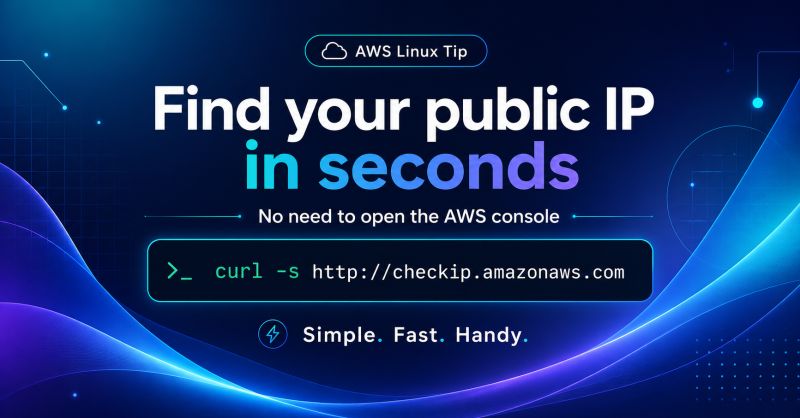
Here's a small AWS/Linux tip I learned recently
When logged into an AWS Linux VM, you might need to quickly check the public IP. Previously, I would open the AWS console or try various Linux commands. Then I found this simple…
 LinkedIn ↗articleApr 20, 2026
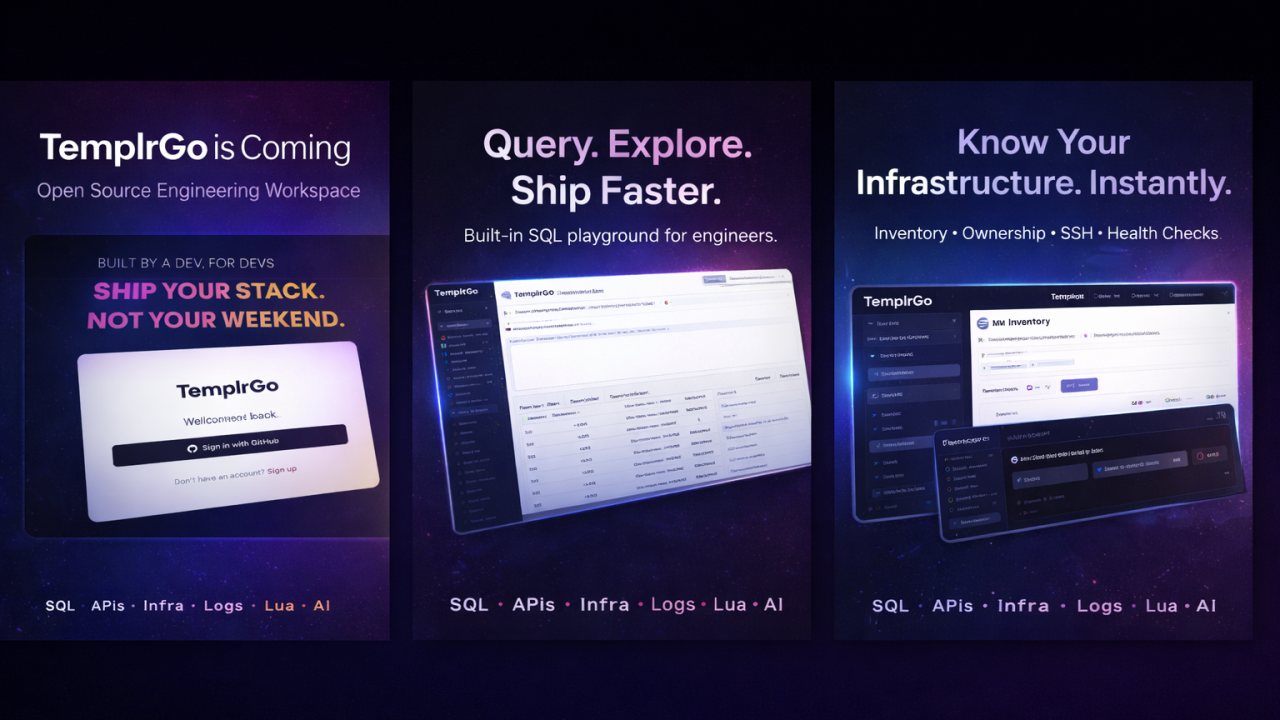
Why I’m Building TemplrGo: Turning Enterprise Engineering Pain into Open Source Productivity
TemplrGo Feature Sets For the last two and a half decades, I’ve worked in enterprise software engineering across product development, architecture, testing, and platform operations. For the last decade, I’ve been leading engineering initiatives around complex data platforms, including my current rol
 LinkedIn ↗articleApr 19, 2026
Beyond Detection: Why Epistemic Honesty Matters in Sensitive Data Discovery and Governance
One underrated principle in data discovery and data catalog products: epistemic honesty. When a sensitive data scan flags PII, PHI, PCI, or other regulated data, the product should be transparent about: what it detected why it detected it how confident it is whether the result is heuristic, ML-infer
 LinkedIn ↗articleApr 11, 2026
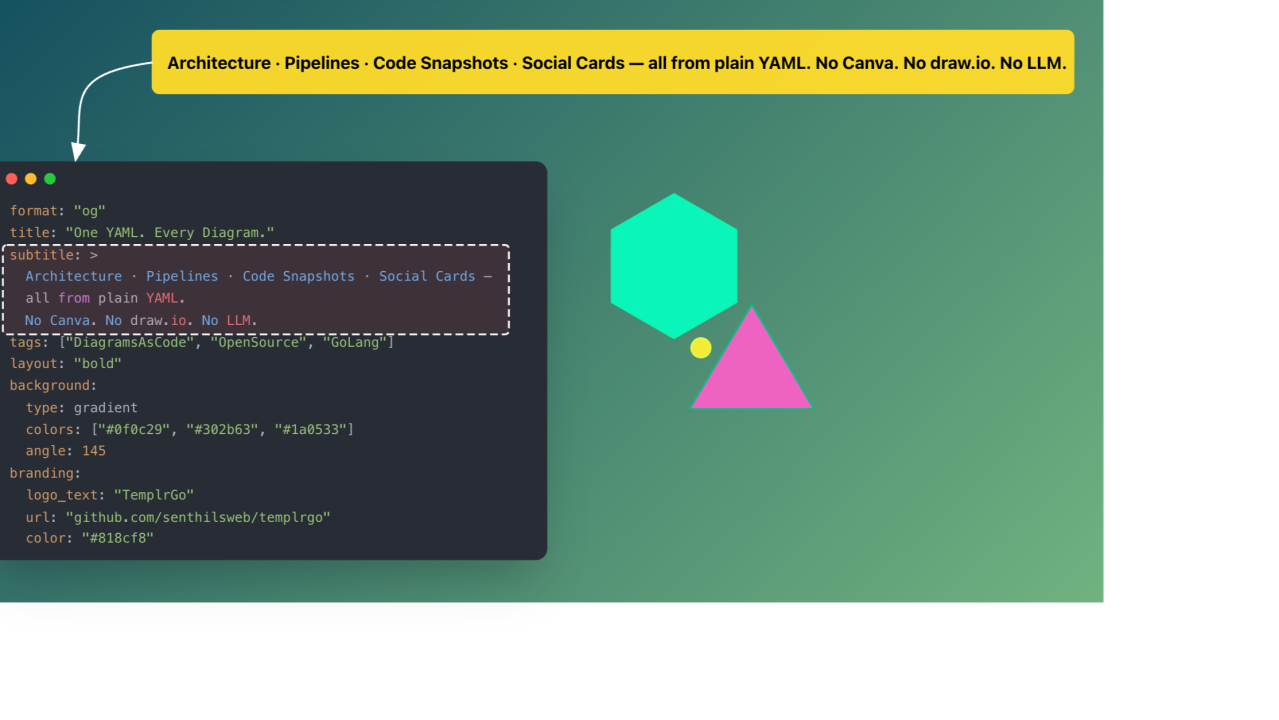
I Replaced Five Design Tools with a YAML-First Visual Rendering Engine in TemplrGo
Every week I need a different visual. Architecture diagram for a client presentation.
 LinkedIn ↗postApr 9, 2026
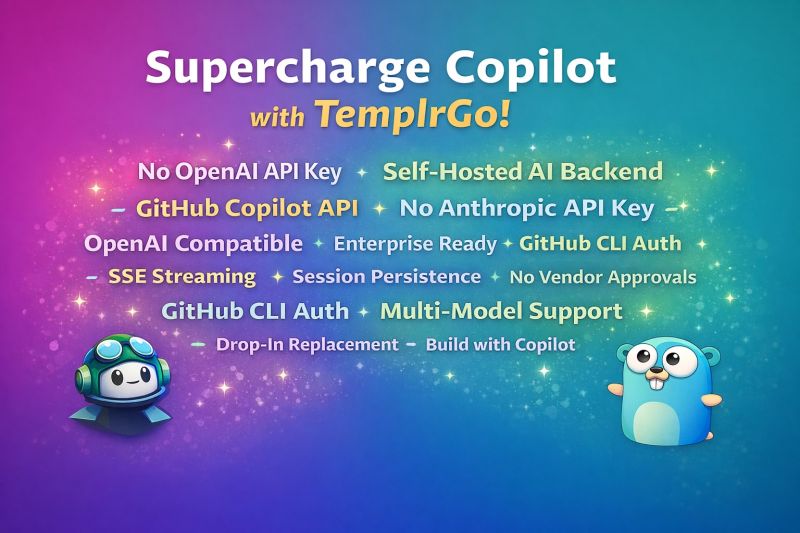
What if AI app development was simpler than expected
Imagine if the GitHub Copilot subscription your team already has could do far more than just provide code suggestions. Many engineers believe that building AI-powered applications…
 LinkedIn ↗postApr 7, 2026
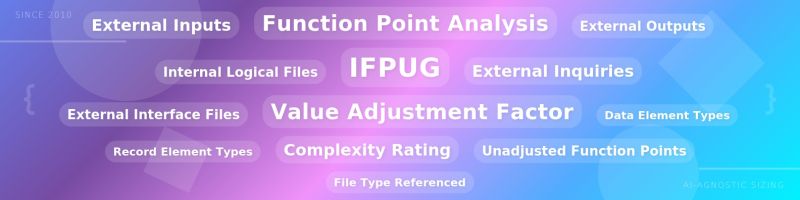
When tools like Copilot, Claude code, Cursor, Codex etc.
speed up coding, scope grows faster and expectations rise. Without a sizing discipline, you’re flying blind at higher speed. Since 2009, I’ve relied on Function Point Analysis…
 LinkedIn ↗postApr 4, 2026
Imagine having everything a developer needs packed into a single ~20MB binary…
that runs on all operating systems—Windows, Linux, and Mac. This includes an API server, SQL playground, Serverless Functions, AI chat, ASK AI Copilot Support, Content Management…
 LinkedIn ↗articleApr 2, 2026
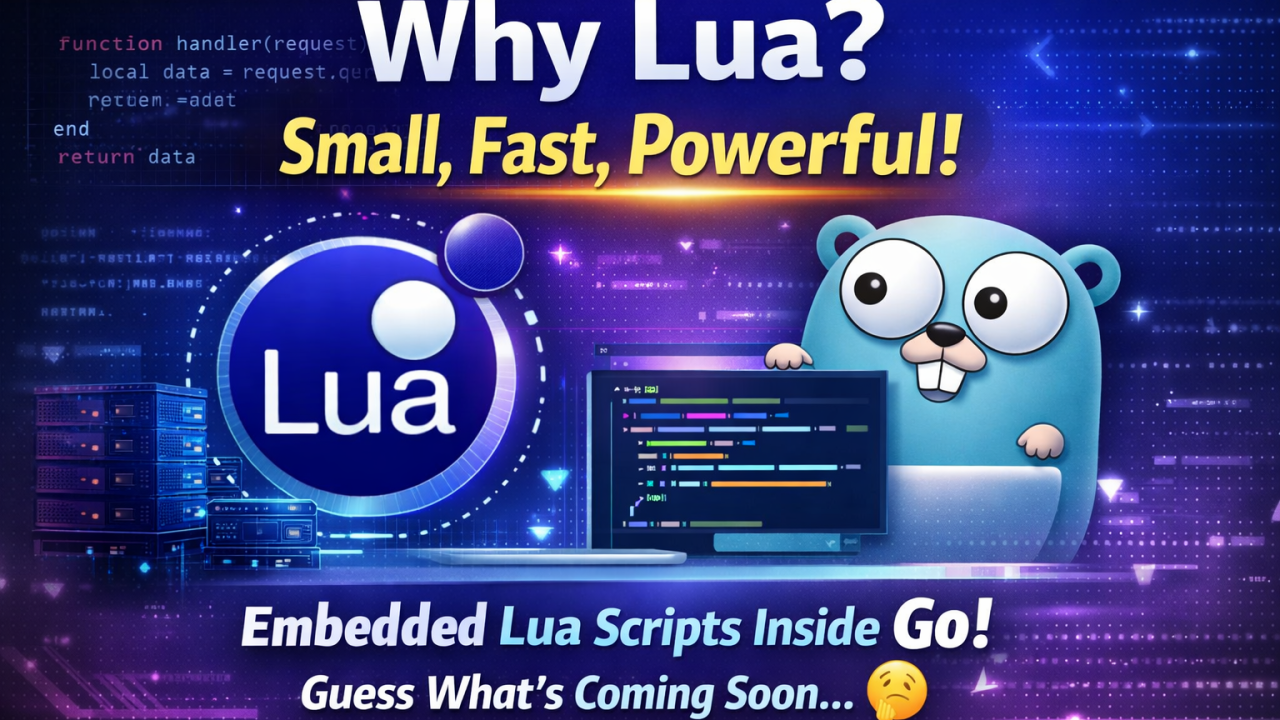
Lua Is Quietly Becoming My Favorite Extension Layer
One of the projects I’m working on is built on Go and Next.js — Go powers the server, and Next.
 LinkedIn ↗articleJan 11, 2026
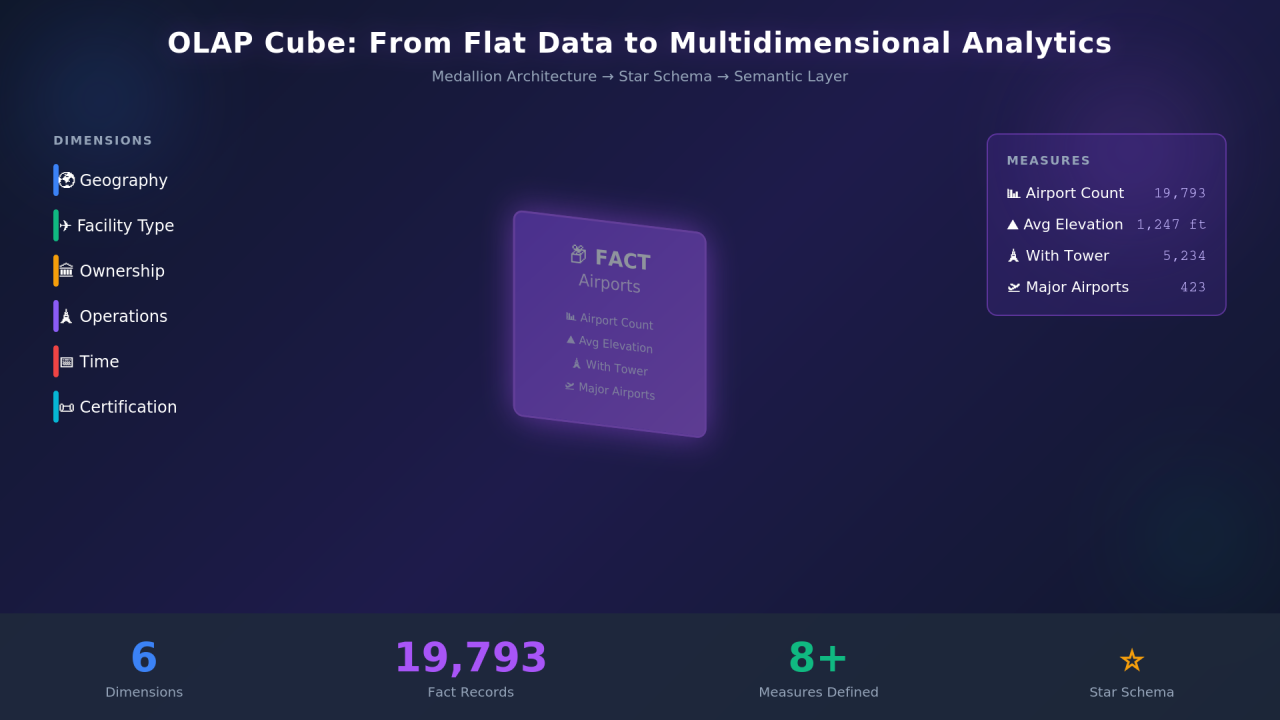
Medallion Architecture & Star Schema: Old Concepts Powering Modern AI Pipelines
You have a flat file or a table. You need metrics. So you write some joins, add aggregations, and ship it -> Nothing wrong with that, It works. But as data grows and questions multiply, that approach starts to crack. To illustrate a more sustainable path, I'll use an airports dataset — 19,793 records, 27 columns mixing GPS coordinates, facility codes, and certification details. Typical messy sourc
 LinkedIn ↗articleJan 9, 2026
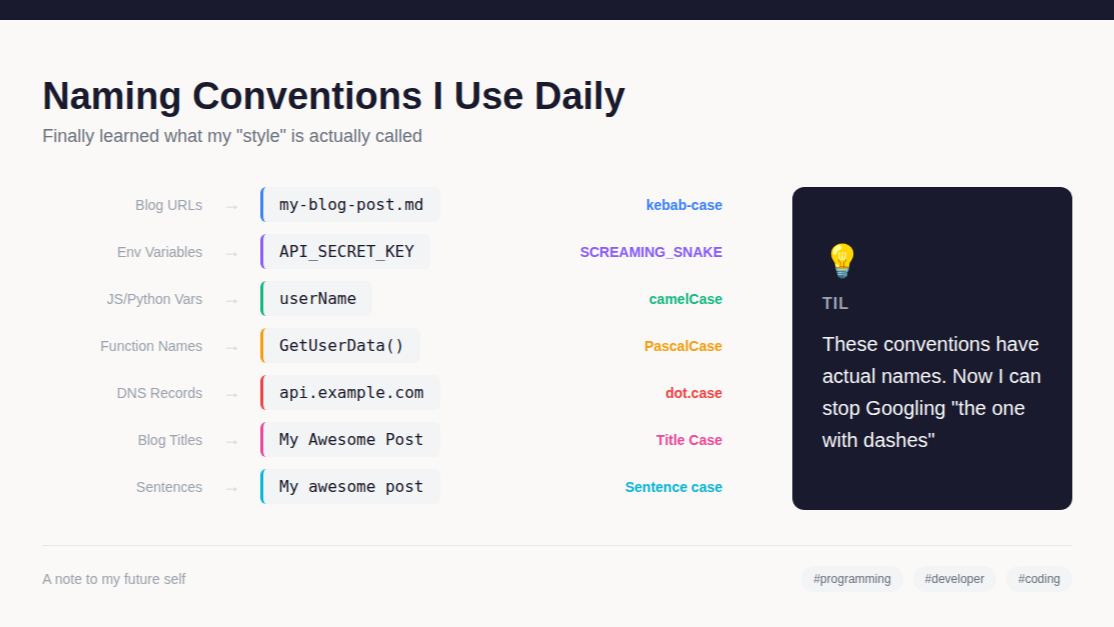
Naming Conventions I Use Daily.
For a long time, I have written code, named files, and defined configuration and environment variables using a consistent style that felt natural. While I was familiar with terms like camelCase, PascalCase, and kebab-case, I often mixed up or forgot others. Here is my personal cheat sheet: Blog post URLs like my-awesome-post.md ? That's kebab-case. Environment variables like API_SECRET_KEY? That's
 LinkedIn ↗articleJan 2, 2026
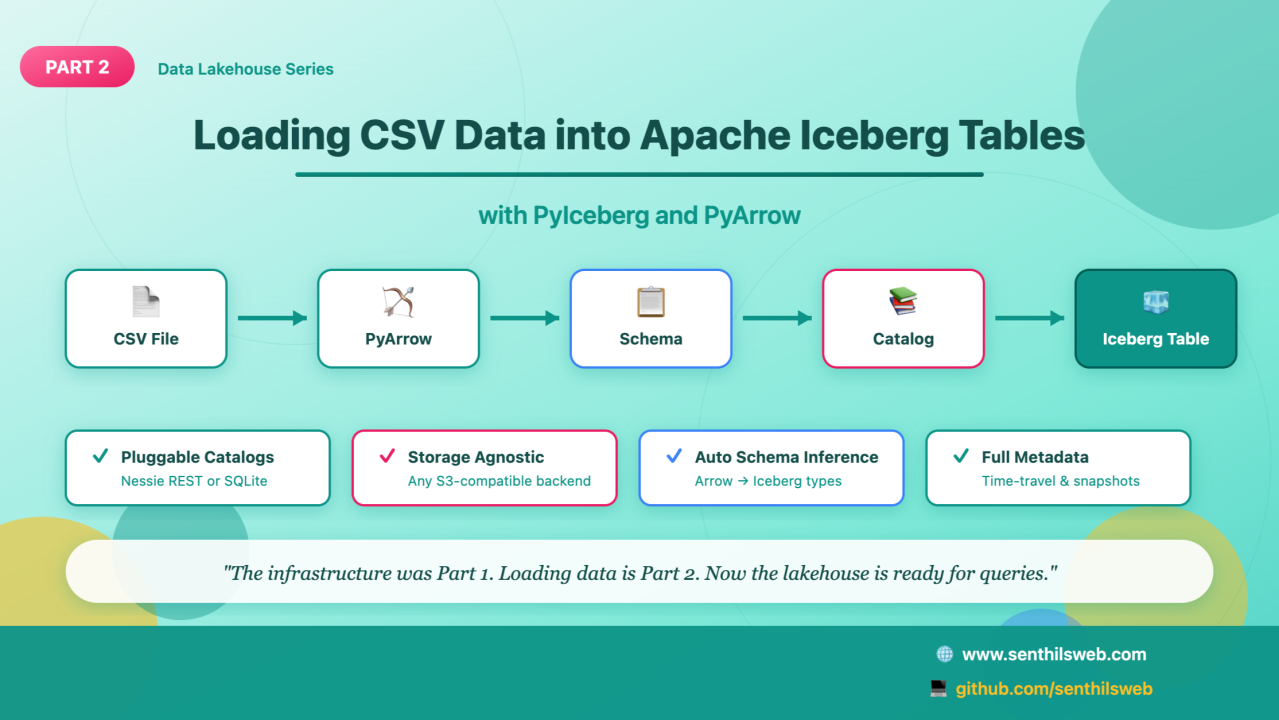
Part 2 - Loading CSV Data into Apache Iceberg Tables with PyIceberg and PyArrow
In Part 1 - Building a $0 Data Lakehouse with Apache Iceberg, Nessie, Neon, and Cloudflare R2 , we set up the infrastructure — a Nessie catalog on Fly.io, Neon PostgreSQL for metadata, and Cloudflare R2 for object storage. All on free tiers. Now comes the interesting part: actually loading data into Iceberg tables . In this article, I'll walk you through a Python-based approach that: Reads CSV fil
 LinkedIn ↗articleJan 2, 2026
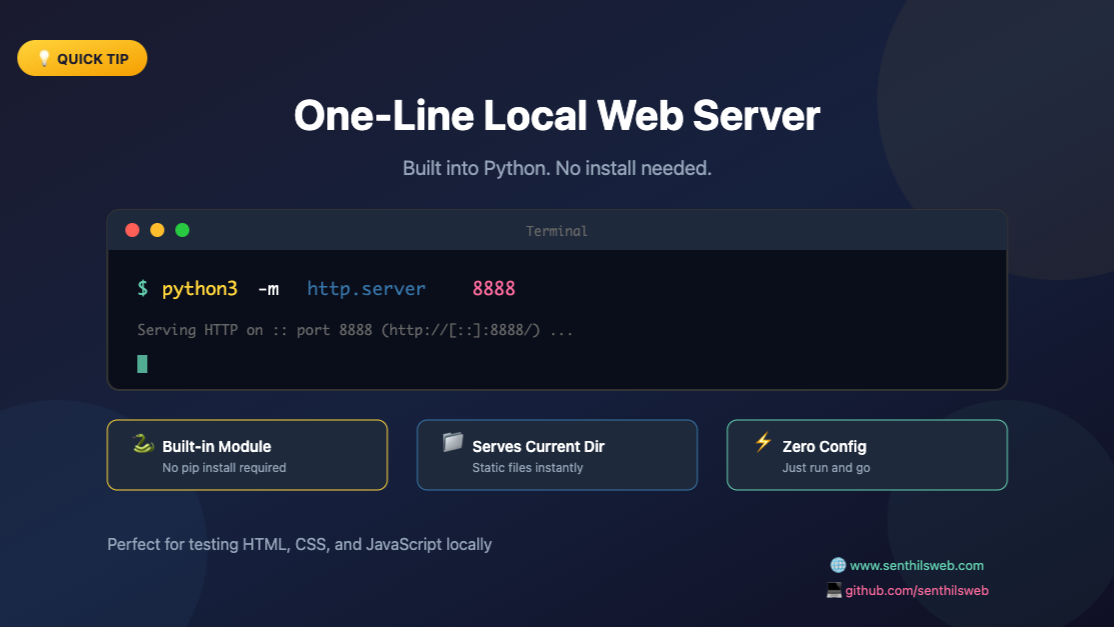
One-Line Local Web Server with Python
Sometimes you just need to quickly serve some HTML files locally. Maybe you're testing a static site, previewing an SVG, or checking how your CSS looks in a browser. You don't need to install anything. Python has you covered. The Command That's it. One line. What It Does Serves files from your current directory Runs on http://localhost:8888 (or any port you specify) Zero configuration - just run a
 LinkedIn ↗articleDec 31, 2025
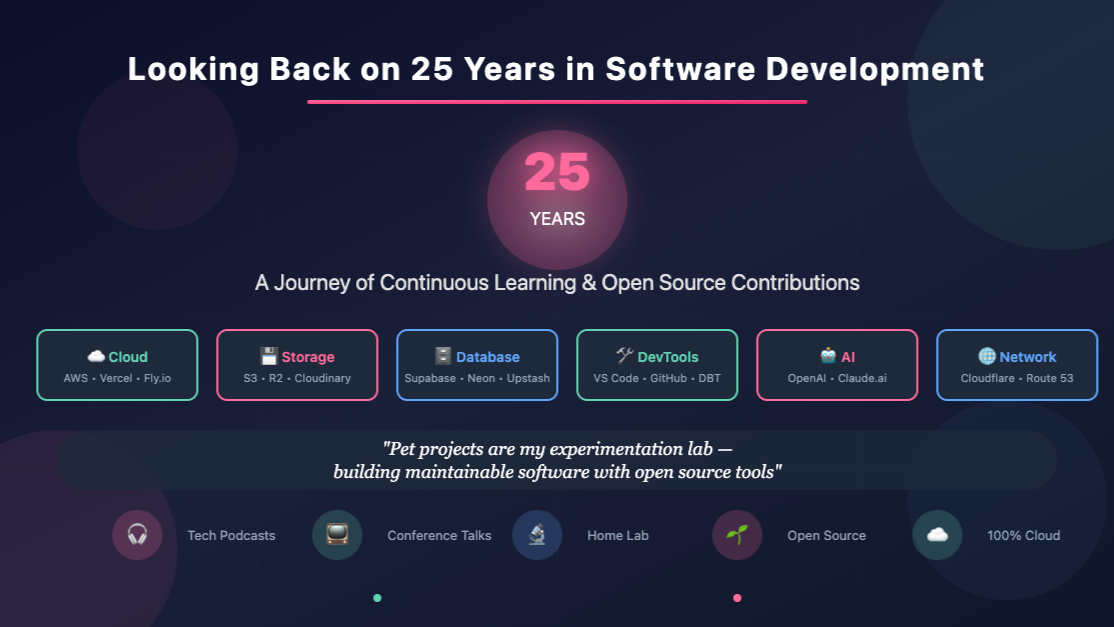
Looking Back on 25 Years in Software Development
This year marks 25 years since I started in software development. As I look back, I'm filled with gratitude for everyone who shaped this journey. To my mentors who saw potential when I couldn't, to colleagues who challenged me to think differently, and to the open source community that welcomed contributions from a curious developer — thank you. Every code review, every late-night debugging sessio
 LinkedIn ↗articleDec 31, 2025
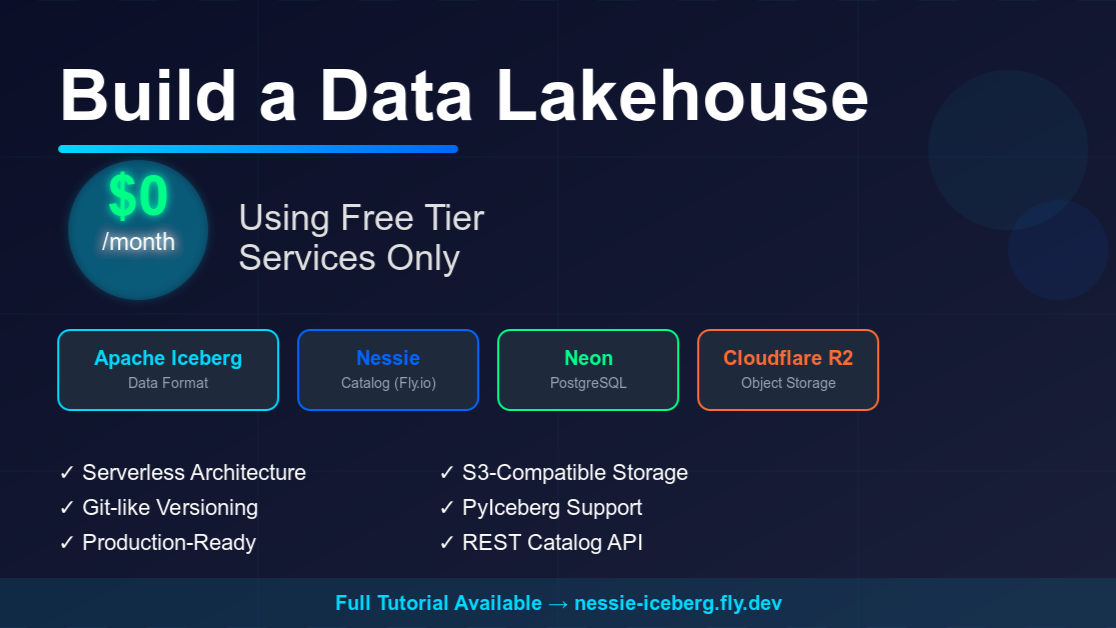
Part 1 - Building a $0 Data Lakehouse with Apache Iceberg, Nessie, Neon, and Cloudflare R2
Modern data lakehouses typically require expensive infrastructure—object storage, metadata catalogs, and databases. But what if you could build a production-ready Apache Iceberg lakehouse using only free-tier services ? In this article, I'll show you how to set up a complete data lakehouse stack for $0/month using: Nessie - Git-like catalog for Apache Iceberg ( Fly.io free tier) Neon - Serverless
I’m happy to share that I’ve obtained a new certification
LinkedIn ↗postFeb 16, 2025I’m happy to share that I’ve obtained a new certification
Social Innovation Leader -Global- from Hitachi! https://lnkd.in/ez4vriya …more Celebrating a New Certification <div class="
 LinkedIn ↗articleFeb 3, 2025
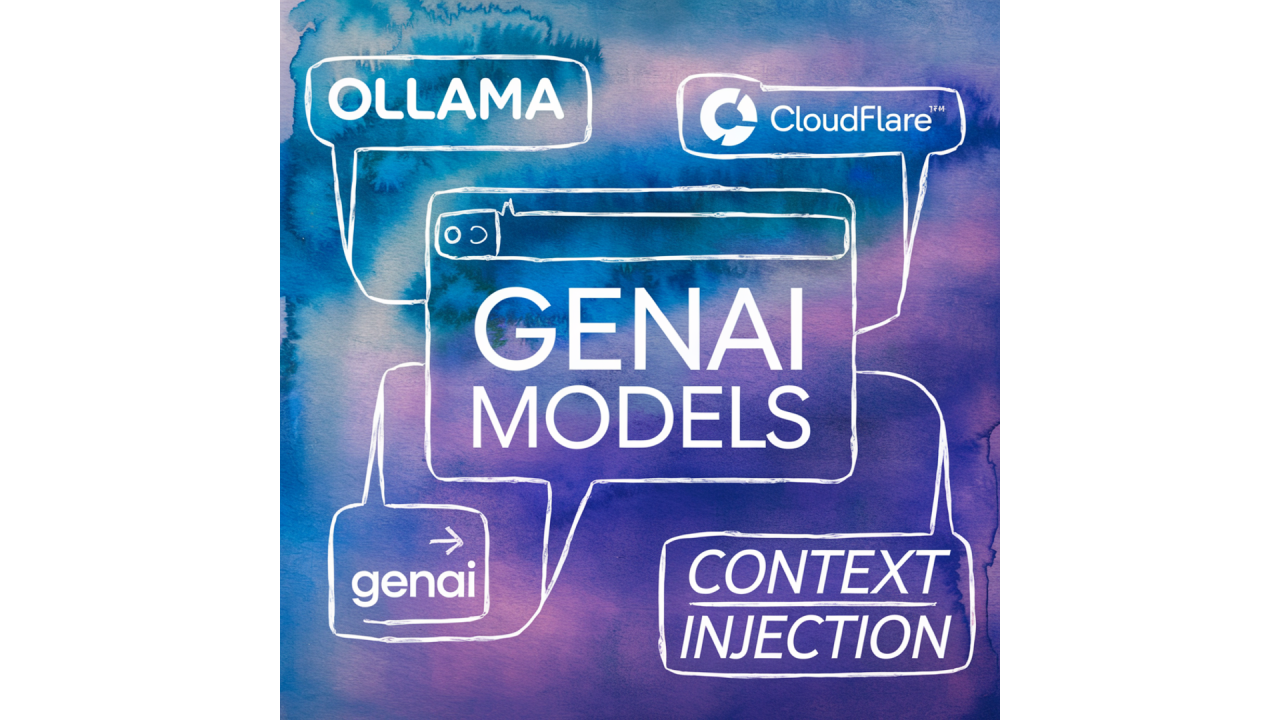
Edge-Optimized GenAI Chat Web-UI for Ollama & Cloudflare AI models with Context Injection
It is a simple GenAI chat web interface built with Next.js that connects to both local Ollama and Cloudflare AI models. This application provides an intuitive interface for interacting with various AI models through a generic chat completions API, featuring customizable settings and real-time streaming responses. The default selected model is Technology Stack Frontend : Next.js 14, React 18 Stylin
 LinkedIn ↗articleJan 27, 2025
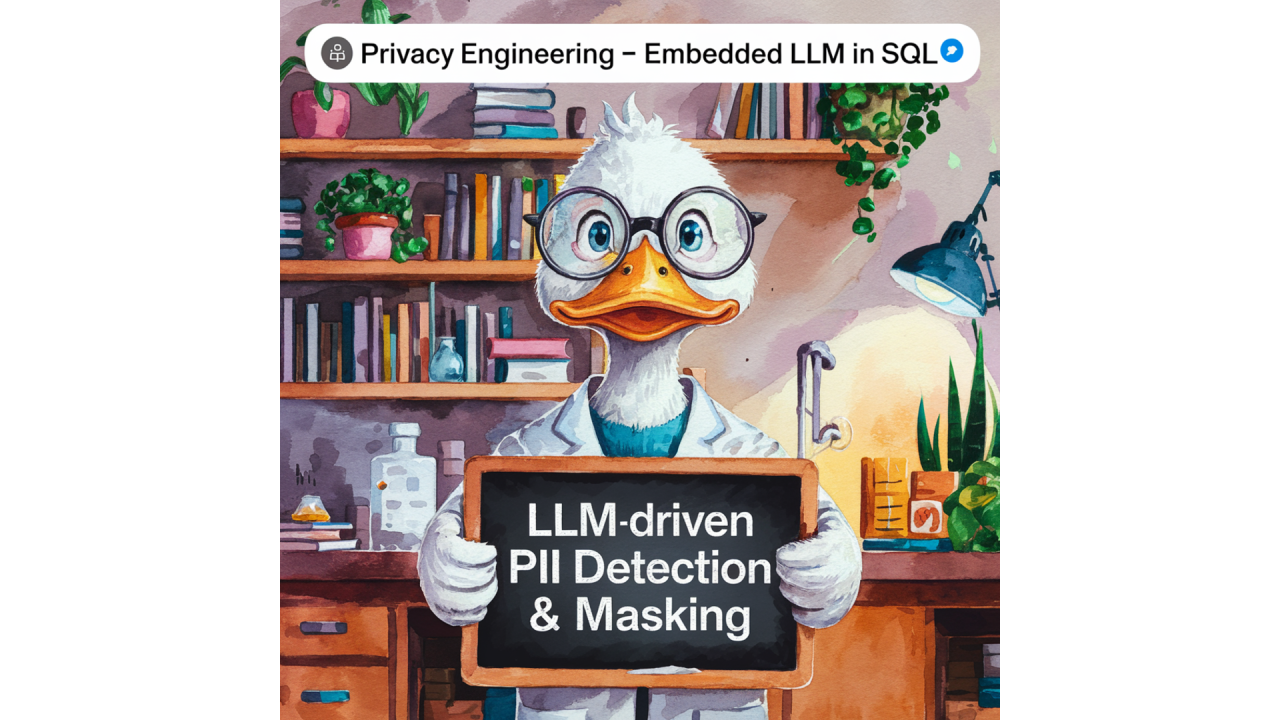
Embedding LLM in SQL is simple!
Inspired by Snowflake’s AI-driven analytics and MotherDuck’s recent implementation of SQL + LLM ( Introducing the function), I explored LLM-powered Business Insights using DuckDB , embedding AI directly into SQL workflows for real-time data intelligence . Use Case: Privacy Engineering – Detecting and Masking PII The fully working code is available as a Jupyter Notebook , which can be accessed from
 LinkedIn ↗articleJan 6, 2025
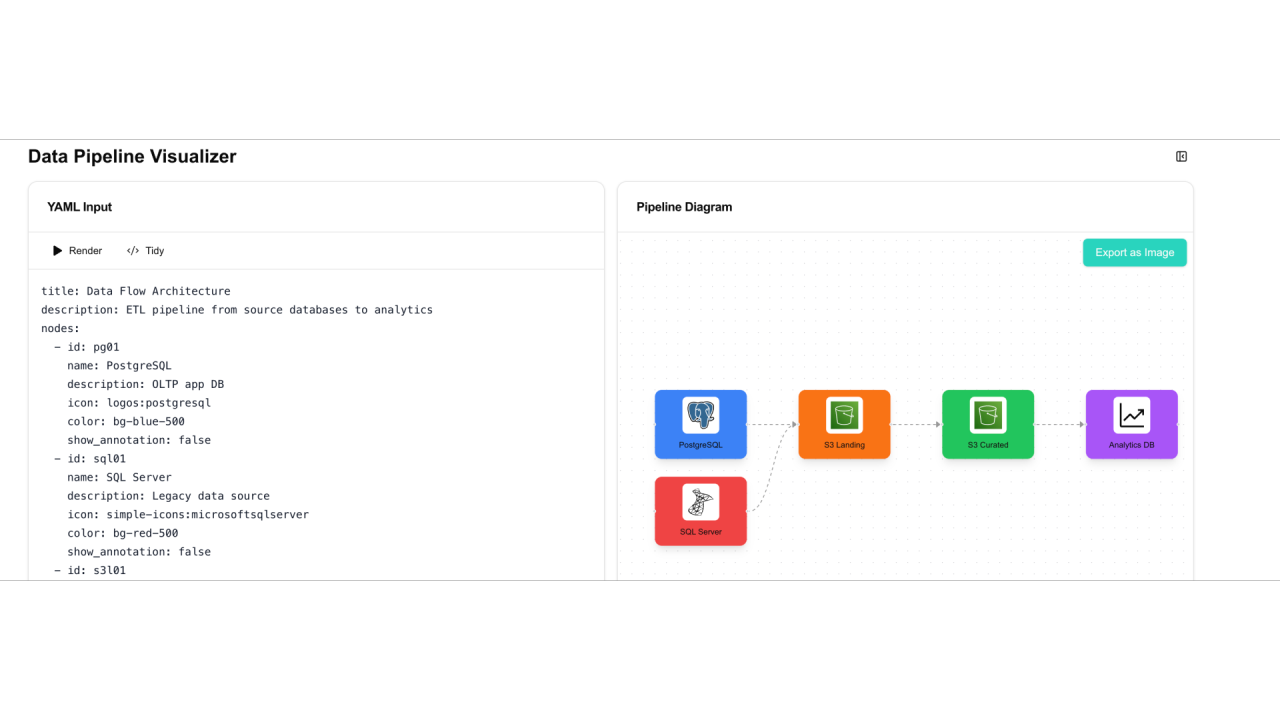
Data Pipeline Diagrams as Code
Introduction Creating diagrams for data pipelines, workflows, and architectures is a routine task for many of us. Whether it's for internal presentations, client discussions, or technical documentation, the process can often feel repetitive and time-consuming. I just launched a new open source tool/utility designed to simplify the process of creating data pipeline diagrams—a YAML-based tool that g
 LinkedIn ↗postJan 1, 2025
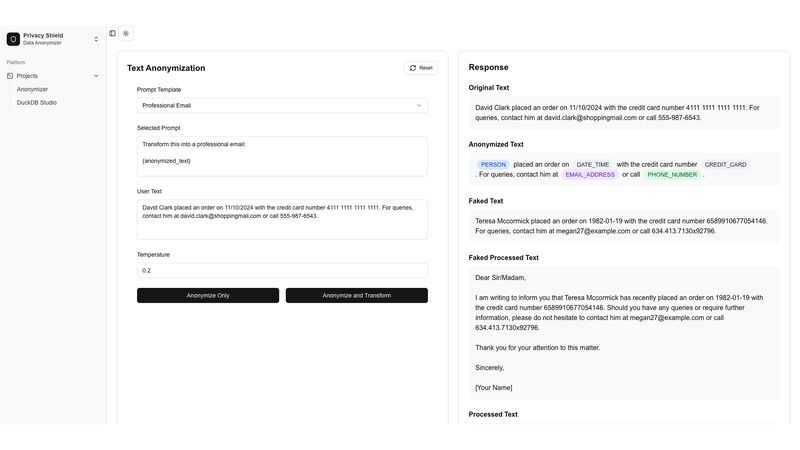
🌟✨ Seeing is Believing
Privacy Shield in Action! ✨🌟 After seeing the response and impressions from the article "Privacy Engineering with LLMs: ...." I posted yesterday motivated me to complete the…
 LinkedIn ↗articleDec 31, 2024
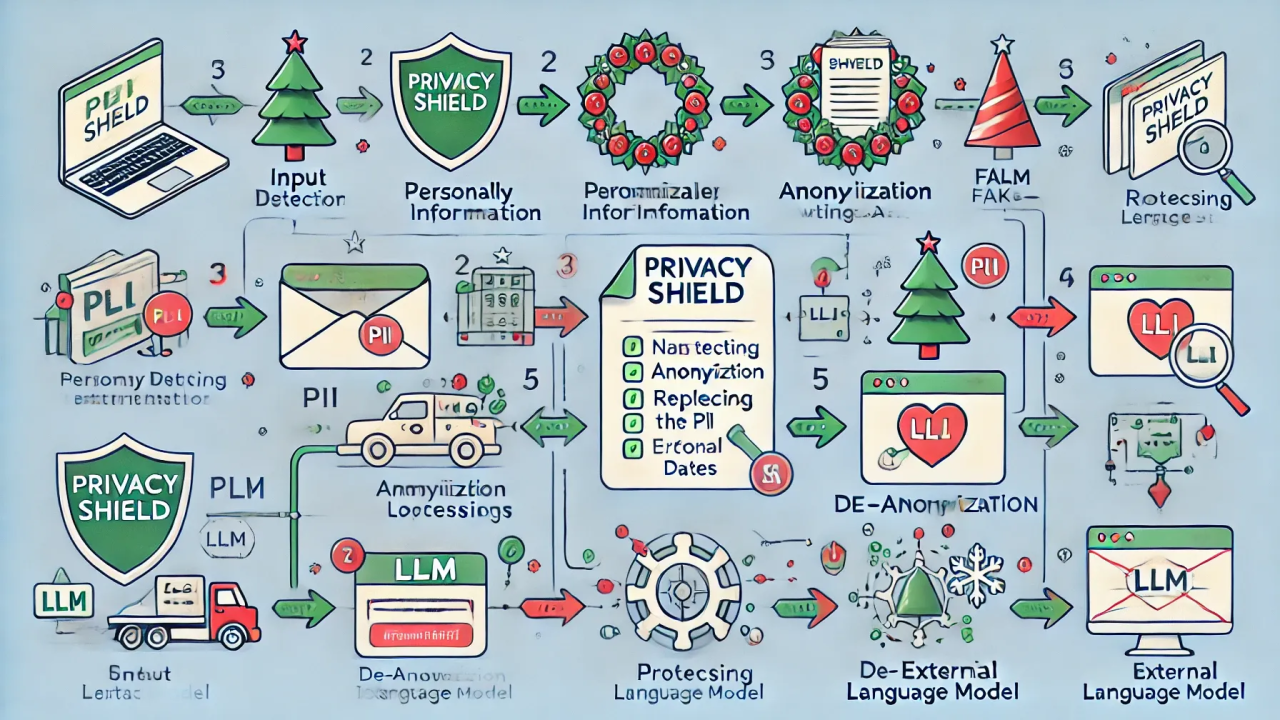
Privacy Engineering with LLMs: Safeguarding PII While Enhancing Text with Privacy Shield
Introduction In today’s data-driven environment, the use of Large Language Models (LLMs) for generative AI and text processing is not just important but increasingly common. With tools like ChatGPT, Google Gemini, Claude.ai , Perplexity and open-source AI models like Llama, Mistral.ai etc. people now rely on LLMs for tasks ranging from email proofreading to refining documents like legal contracts
 LinkedIn ↗articleDec 27, 2024
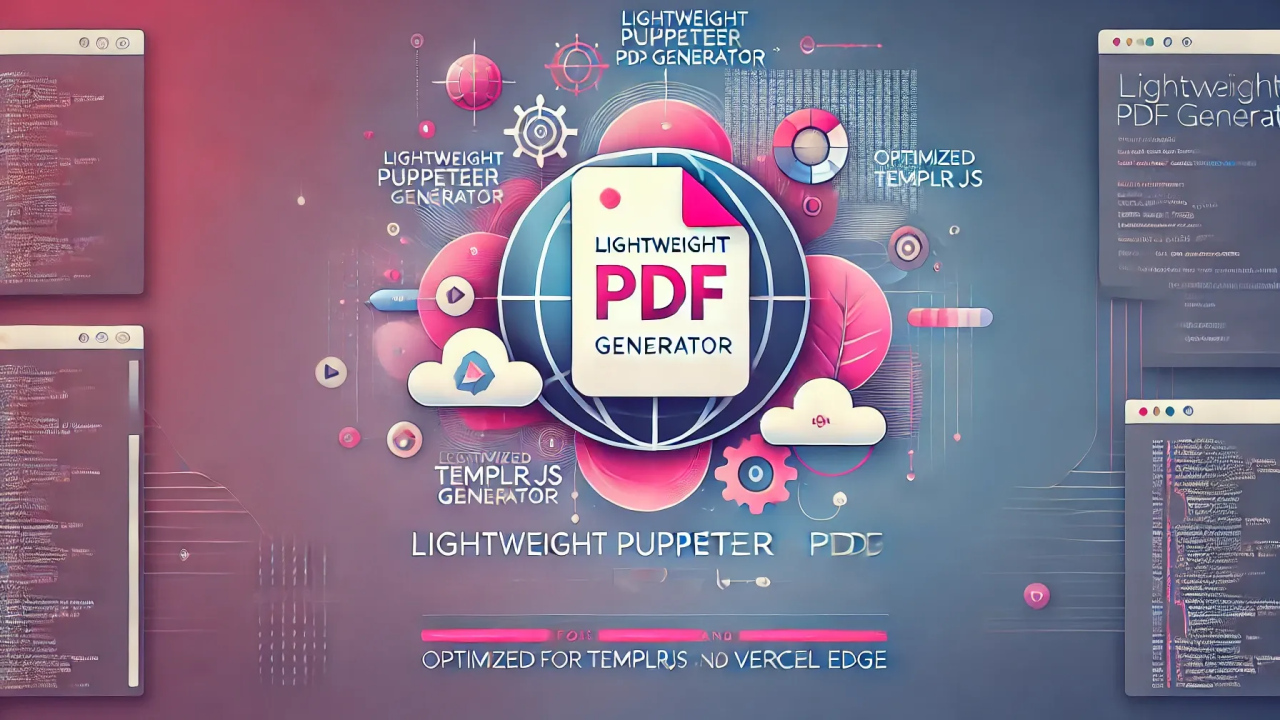
Lightweight HTML to PDF with Puppeteer: Simple PDF Export for Edge Deployments
This microservice is designed to address simple PDF export needs, making it ideal for generating blog articles, profile cards, and other lightweight use cases. It prioritizes efficiency and edge platform compatibility, avoiding the overhead of heavy PDF reporting tools. While it's a valuable addition to my open-source TemplrJS Nuxt Fullstack Framework , it is equally useful for standalone applicat
 LinkedIn ↗articleDec 25, 2024
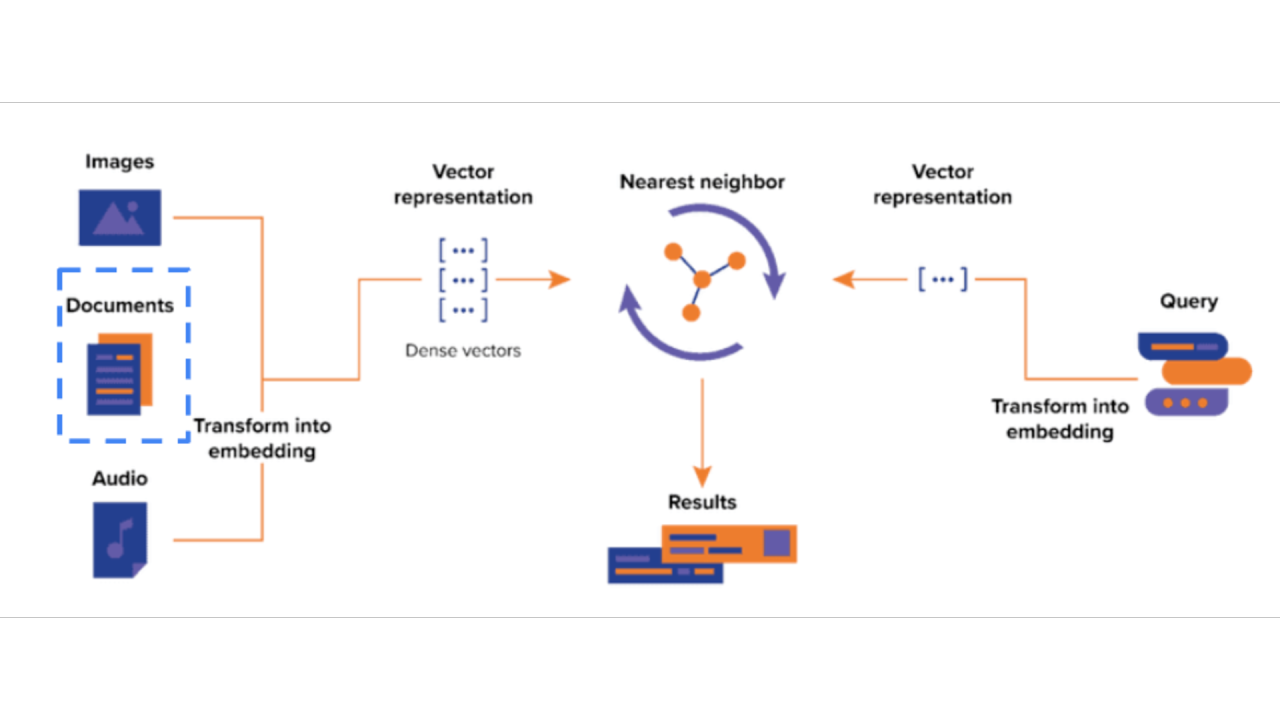
Building a Generative Q&A Engine with Semantic Search and Embeddings
Introduction In the age of AI-powered tools and intelligent systems, the ability to search, analyze, and generate insights from documents has become paramount. Semantic search and generative AI offer powerful capabilities to build engines that allow querying large sets of documents, answering questions naturally, and even recommending relevant content. This article is part one of a multi-series gu
📊 My 2024 LinkedIn stats (from Cleve.ai)
LinkedIn ↗postDec 23, 2024📊 My 2024 LinkedIn stats (from Cleve.ai)
20 posts - 321 total reactions - 8 comments Here's 10 lessons I learned in 2024: 🛠️ Open-source projects can fill gaps in existing tools. 🌐 Creating user-friendly interfaces…
 LinkedIn ↗articleOct 6, 2024
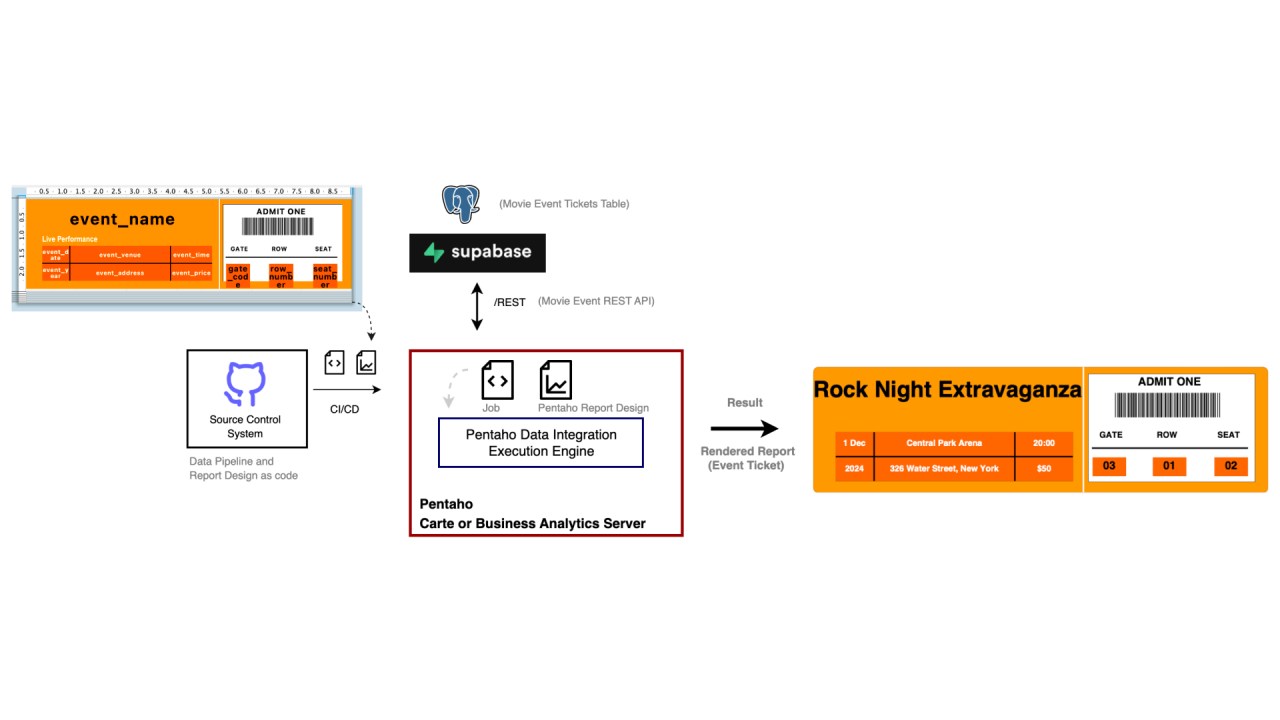
Crafting Stunning Event Tickets with Pentaho Reports: A Low-Code No-Code Journey!
When it comes to generating business reports, organizations often face a plethora of choices. Solutions like JasperReports, Crystal Reports, Microsoft Reporting Services, ActiveReports for .NET, HTML to PDF etc. dominate the market for their powerful report design and rendering capabilities. However, in this article, I'll dive into Pentaho Reports —and demonstrate how I created a flashy and stunni
 LinkedIn ↗articleSep 30, 2024
Deploying Pentaho Carte Server on Fly.io with Firecracker VM: A Fun Way to Learn ETL! 🌟
This is a quick guide on deploying the Pentaho Carte Server on Fly.io using Firecracker VM —a great way to learn and practice the Pentaho data platform with the Pentaho Data Integration carte server. Carte is a lightweight web container that allows you to set up a dedicated, remote ETL server, making it easier to manage and execute Pentaho jobs. Firecracker is a lightweight virtualization technolo
 LinkedIn ↗articleSep 29, 2024
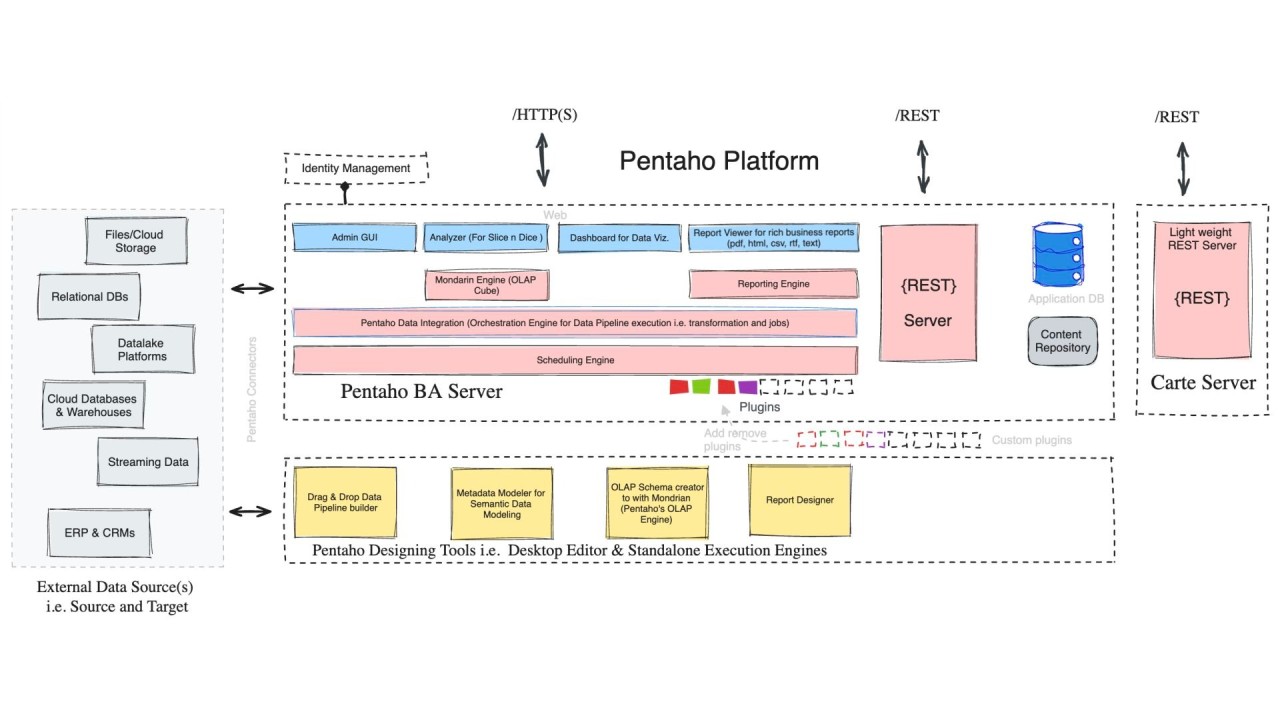
Pentaho: Versatile Data Engineering for All Needs—ETL, Reverse ETL, ELT, Data Lakes, Big Data, Data Quality, Reporting, Visualization & Data 360
Pentaho remains a powerful and relevant tool in the data integration and analytics space. Its comprehensive features, cross-platform support, and strong community make it an excellent choice for organizations and developers alike. Whether you want to build complex data pipelines, design insightful reports, or dive into data analysis, Pentaho has the tools to help you succeed. In today's fast-chang
 LinkedIn ↗articleSep 21, 2024
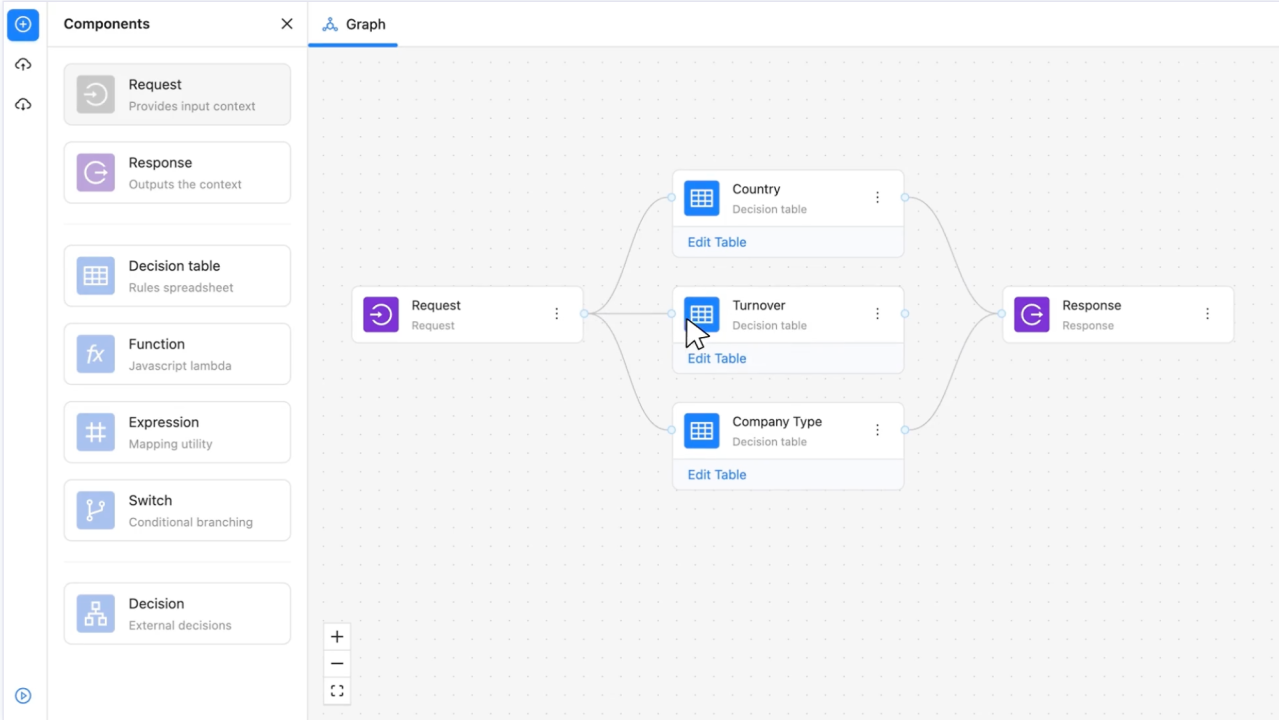
Simplify Decision Logic with GoRules: An Embeddable Rules Engine for Python, Go, Rust, and NodeJS
If you've worked with JBOSS Drools or other rule engines, you're probably all too familiar with the complexity that comes with them. Managing decision-making logic often turns into a chore, with intricate configurations and steep learning curves. That's why I'm excited to introduce GoRules Zen BRE —an open-source Business Rules Engine (BRE) built in Rust , designed to support Python, Go, Rust, and
 LinkedIn ↗articleSep 14, 2024
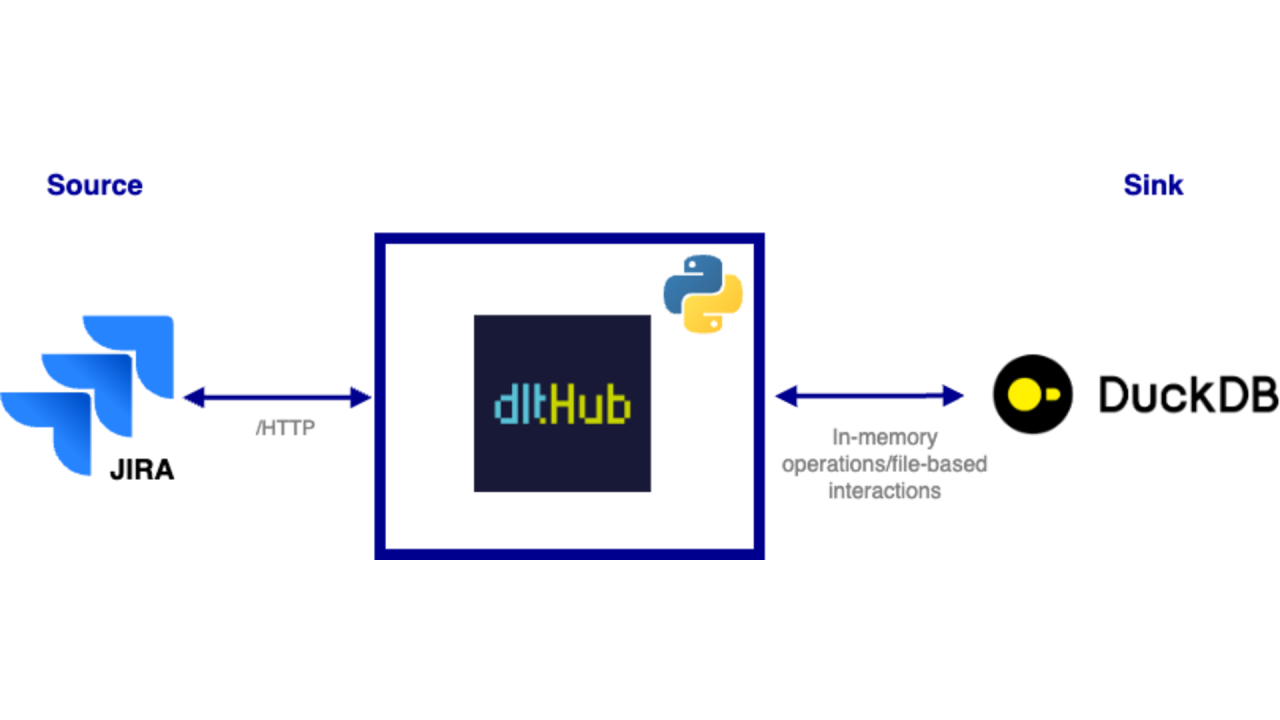
JIRA to DuckDB Bot: A Simple Python Data Pipeline with DLThub
Use Case Organizations often use JIRA for project management, and the need to automate data extraction from JIRA for analytics is common. The approach was to create a lightweight bot that automates the extraction of JIRA issue data using a JQL query, processes it in CSV format, and loads it into databases like DuckDB for development purposes or Snowflake for production-level analytics. This provid
 LinkedIn ↗articleSep 10, 2024
Social-Card: Dynamic Image Creation on the Edge with Vercel Open Graph
social-card: A dynamic image generator for business, profile, and social cards using Vercel Open Graph, Next.js, and TailwindCSS. Easily customize and create visually appealing cards for any purpose! Features Business, Profile, and Social Cards: Automatically generate profile cards for sharing across platforms. QR Code Generation: A built-in API to create QR codes that can be embedded in profile c
 LinkedIn ↗articleSep 8, 2024
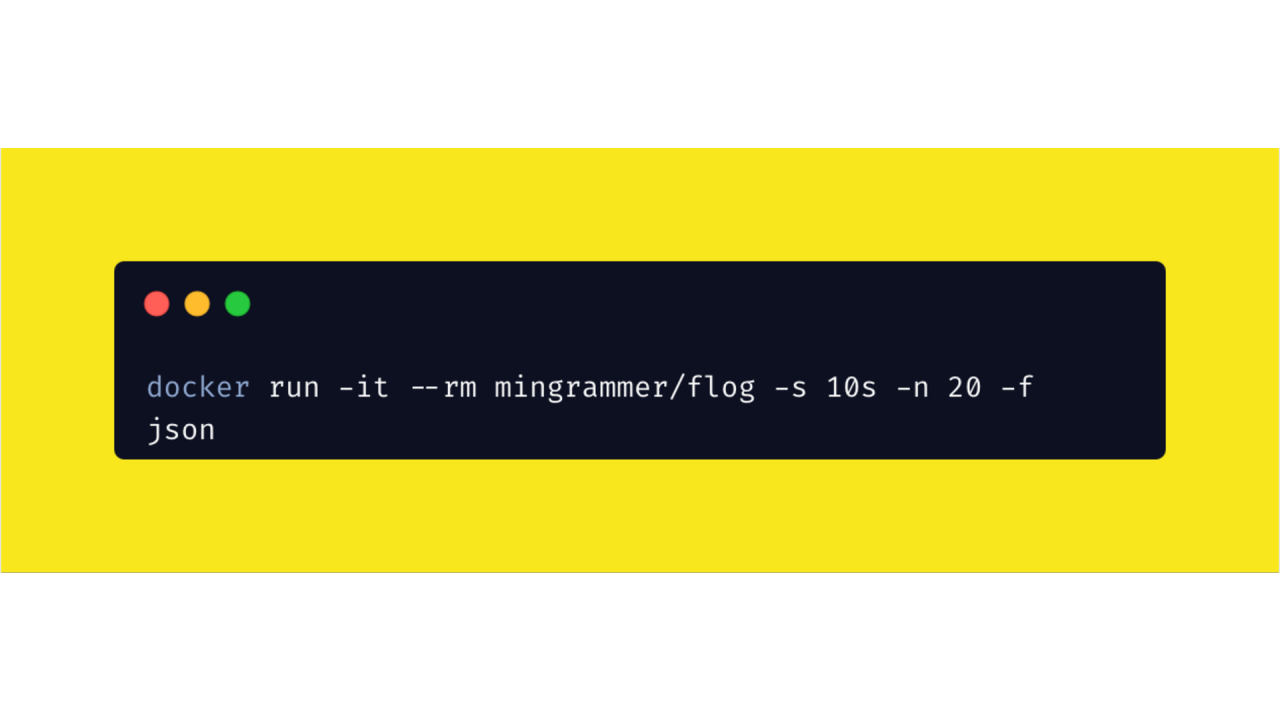
Flog: A Powerful Fake Log Generator by @mingrammer 🚀📊
Looking for a simple way to generate fake log data for testing or simulating real-world scenarios? Look no further than Flog by @mingrammer ! Flog supports multiple common log formats like , JSON, and Common Log Format, making it versatile for various use cases. Whether you're testing log management systems, benchmarking, or generating synthetic data, Flog has you covered . Best of all , it's avai
 LinkedIn ↗articleSep 8, 2024
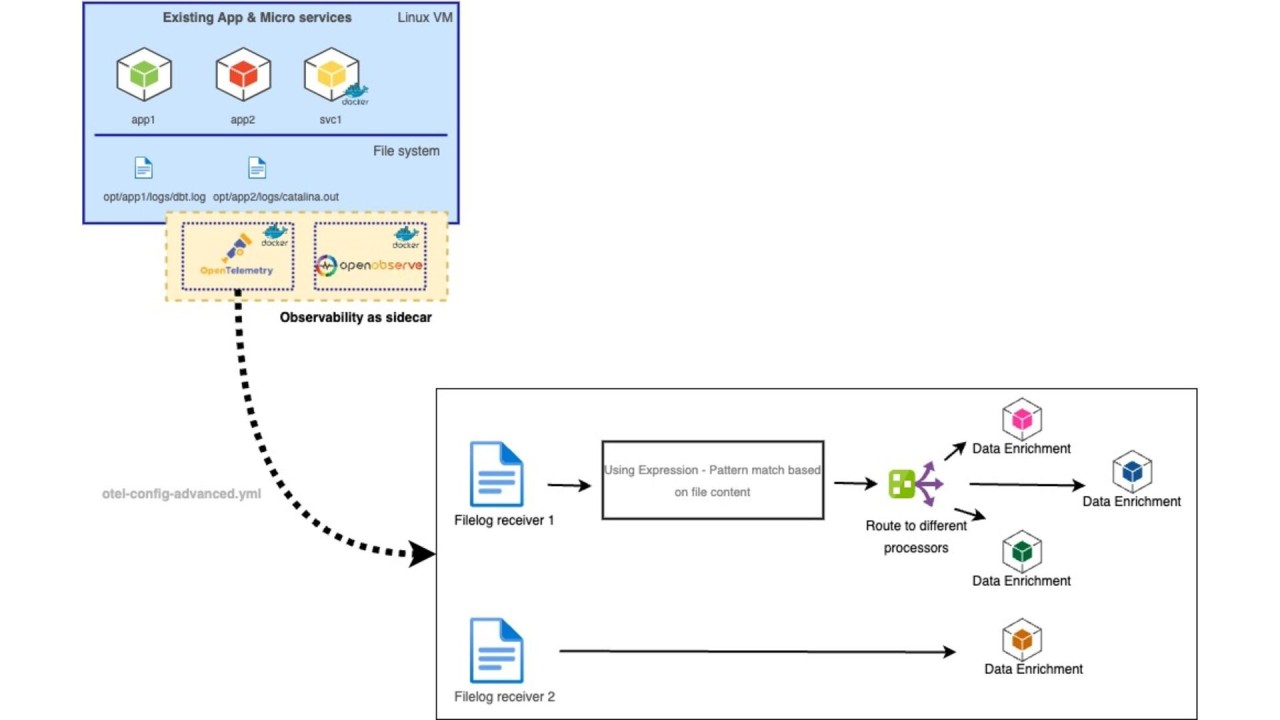
Mastering Otel collector - Filelog Receiver: Log Routing & Data Enrichment for Microservices
This article is a sequel to my earlier post, “ Instant Observability with Zero Code! ” . In this second part of the series, we dive into more advanced configurations for the Open telemetry collector especially the filelog receiver for log files routing and data enrichment leveraging router, multiple filelog receivers, regex parsers etc. Modern Applications & Microservices In today’s world, modern
 LinkedIn ↗articleSep 1, 2024
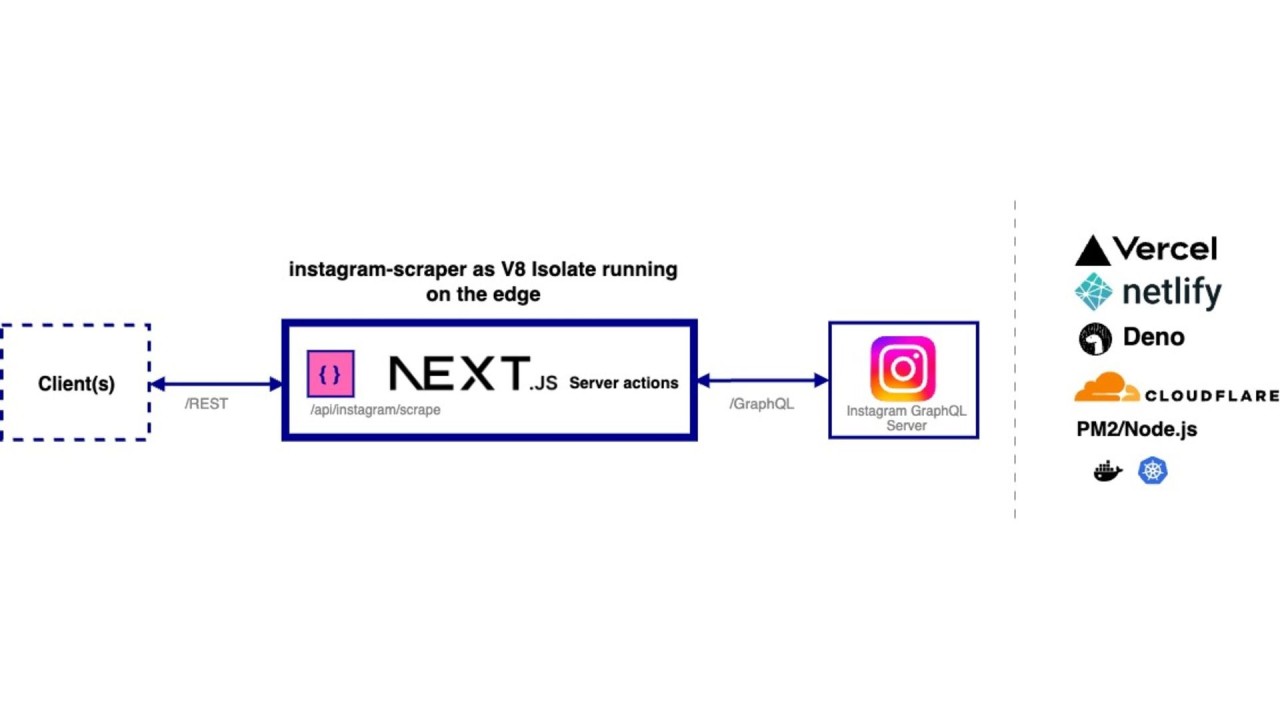
Scrape and Transform Instagram Posts into Blog Content—No API Key Needed!
A simple, serverless tool that effortlessly fetches Instagram posts, complete with images, without the need for an API key! Whether you're a content creator, marketer, or small business owner, this tool can help you seamlessly repurpose your Instagram content for your blog or website. Highlights: Extracts your latest Instagram posts exposed as REST api. No API key or complex authentication require
 LinkedIn ↗articleSep 1, 2024
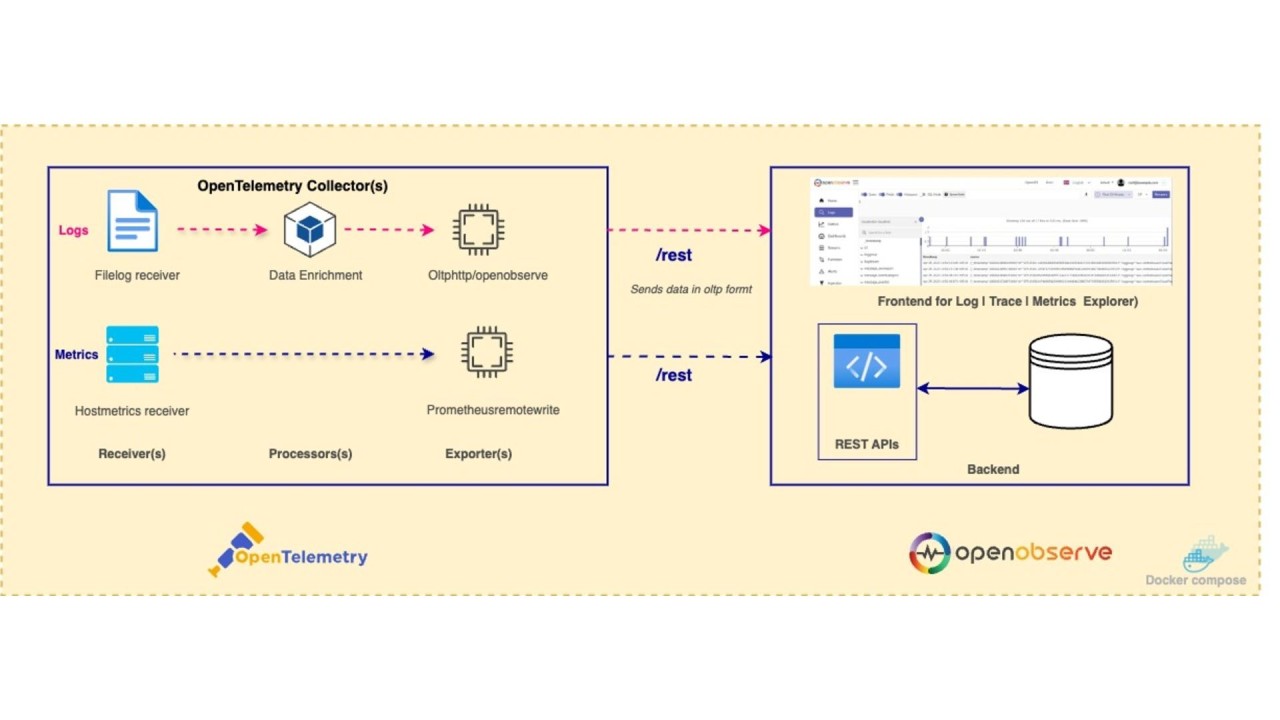
🚀 Instant Observability with Zero Code!
Need observability in your existing applications? Look no further! I’ve developed a ready-to-use, zero-code solution that brings observability to your applications, regardless of the technology or platform. This Dockerized sidecar leverages OpenTelemetry and OpenObserve seamlessly integrate telemetry and observability without requiring any code changes. Adding Observability as Sidecar into your ex
Had an incredible week at the Pentaho office in Orlando
LinkedIn ↗postAug 19, 2024Had an incredible week at the Pentaho office in Orlando
🙌 It was all about collaboration, innovation, and, of course, some well-deserved downtime with this amazing team. 🚀 Working together not only drives results but also builds…
 LinkedIn ↗articleJun 11, 2024
Introducing Semantic Data Modeling with Malloy and DuckDB | MotherDuck | PostgreSQL | BigQuery
If you work in Data Engineering, Data Science, or AI/ML, you have likely encountered terms such as DataOps, DataFabric, Data Governance, Business Metadata Management, ETL & Reverse ETL, Data Quality, Knowledge Graph, Semantic Layer/Data Modeling , and Self-Service Analytics. Let us explore what semantic data modeling is and why it is generating so much hype. What is a Semantic Layer? According to
 LinkedIn ↗articleApr 27, 2024
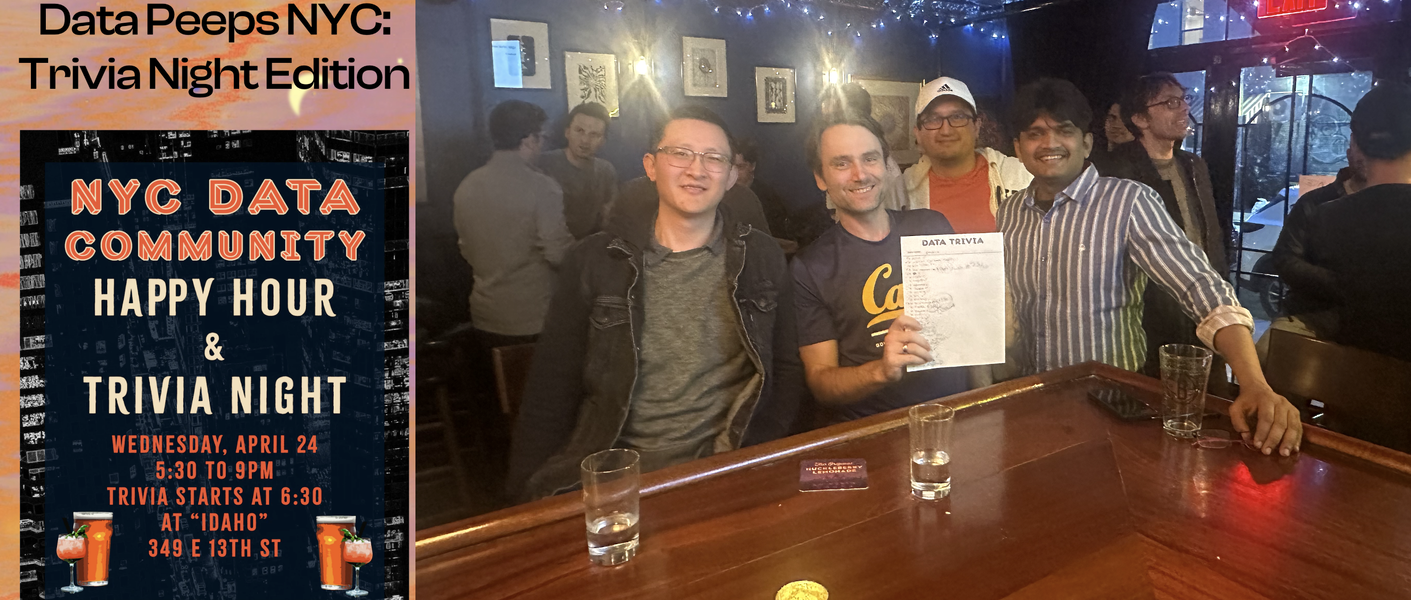
Kudos to #MotherDuck for a successful first Data Community Meetup in NYC!
What a night at Data Peeps NYC Trivia! Teamed up with brilliant minds: Our Squd Anthony Elizondo from Adobe, Ryan Shaffer from AWS, Senthilnathan Karuppaiah from Pentaho, a Hitachi Vantara Company, and Wangda Zhang from MS Research - clinched first place! 🥇🦆
 LinkedIn ↗articleApr 21, 2024
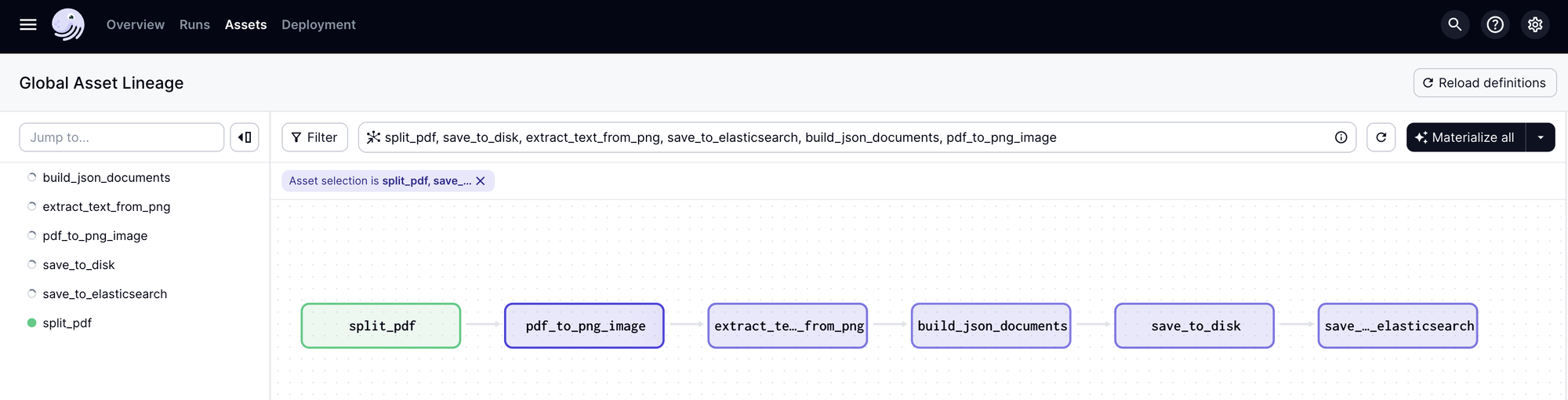
Streamlining Data Workflows: How I Use Dagster to Solve Practical Problems for Reliable Data Pipelines
I'm sharing a collection of my work in data engineering that showcases practical applications of Dagster for managing and orchestrating data pipelines. Through these examples, you'll discover how Dagster helps streamline and optimize various data processes. In this collection, I've included tasks related to data engineering, and other day-to-day application-related long-running multi-step backgrou
 LinkedIn ↗articleApr 16, 2024
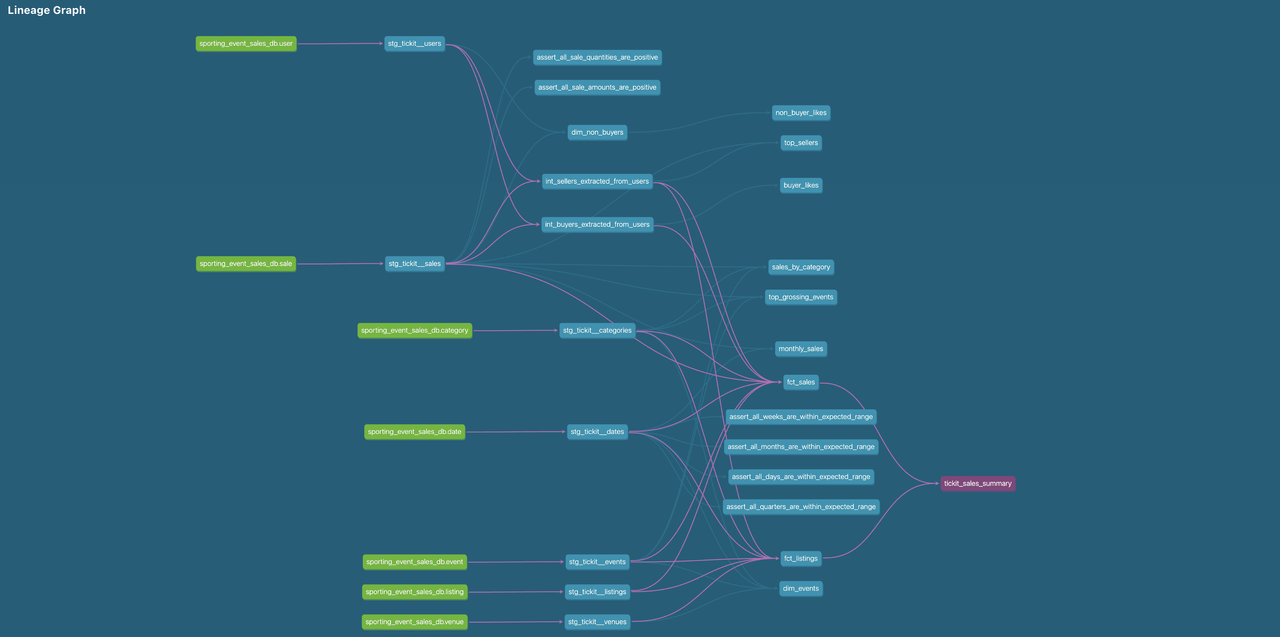
🚀 I’m pleased to present the dbt-duckdb-tickit-pipeline, a data engineering workflow integrating dbt with DuckDB tailored around the TickitDB schema.
Generic Data Lake Architecture w ETL/ELT Data Pipeline https://github.com/senthilsweb/dbt-duckdb-tickit-pipeline This project is a tailored workflow designed to empower data engineers with a seamless and robust data engineering pipeline using dbt alongside DuckDB, focusing on the well-known TickitDB schema. As a complement to this work, my open-source projects, DuckDB Data API and DuckDB Studio ,
✨ DuckDB Data API Enhanced with Serverless Redis Cache for Better Edge Performance ✨
LinkedIn ↗articleApr 15, 2024✨ DuckDB Data API Enhanced with Serverless Redis Cache for Better Edge Performance ✨
I've noted concerns and personally observed that my duckdb-studio application , hosted on Vercel using the hobby plan, frequently crashes due to function timeouts. Developing on Vercel's hobby plan poses significant challenges, such as a maximum function invocation time of 10 seconds and limited memory , which impact the performance of data-intensive applications. To mitigate these limitations, I
✨I am pleased to announce that DuckDB Studio has integrated SQLGlot, a respected SQL parser, transpiler, and optimizer✨
LinkedIn ↗articleApr 12, 2024✨I am pleased to announce that DuckDB Studio has integrated SQLGlot, a respected SQL parser, transpiler, and optimizer✨
SQL Parsing Capabilities in DuckDB Studio Powerd by SQLGlot Python library What is SQLGlot? SQLGlot is a no-dependency SQL parser, transpiler, optimizer, and engine. It can be used to format SQL or translate between 21 different dialects like DuckDB , Presto / Trino , Spark / Databricks , Snowflake , and BigQuery . It aims to read a wide variety of SQL inputs and output syntactically and semantica
 LinkedIn ↗articleMar 31, 2024
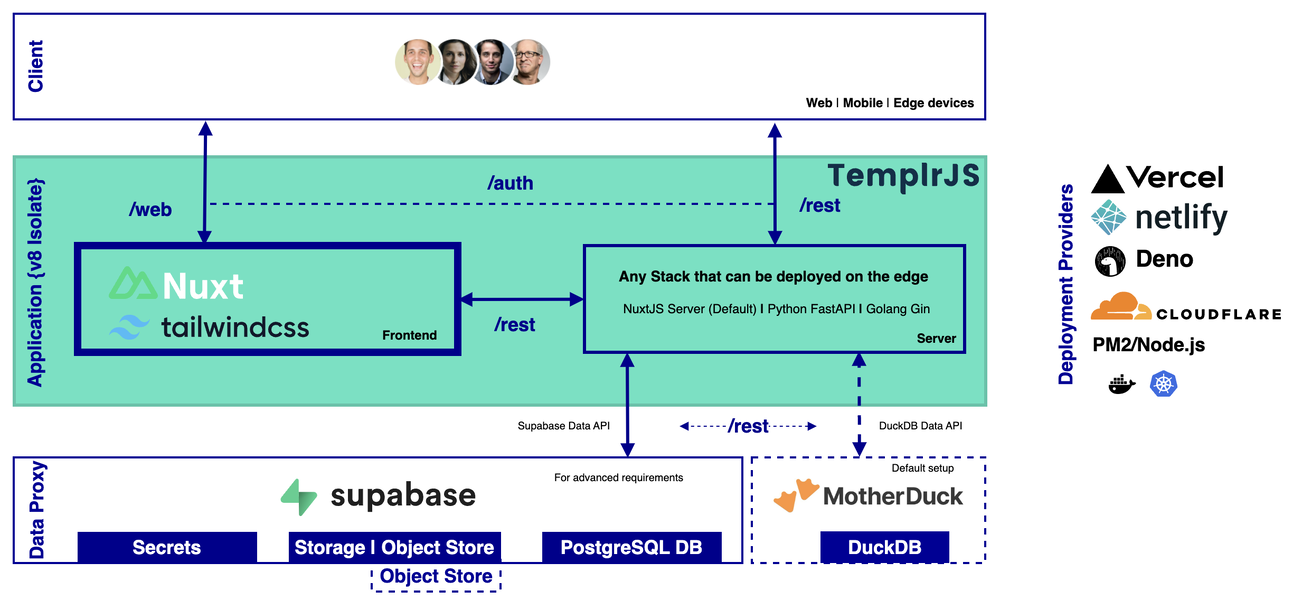
Re-Introducing TemplrJS: Another One of My Open Source Contributions, Powering Modern Web and Mobile Apps with NuxtJS and MotherDuck (DuckDB).
TemplrJS is an Open Source Developer tooling platform I developed, leveraging the capabilities of Vue.js, Nuxt.js, Tailwind CSS, Supabase, and DuckDB/MotherDuck. It's crafted to provide developers with a seamless and efficient experience for creating fast, performance-optimized web and mobile sites, apps, and data-driven dashboards. I initiated the TemplrJS Project to power my blog site www.senthi
 LinkedIn ↗postMar 27, 2024
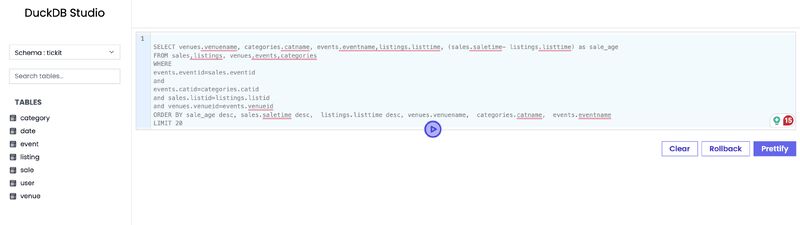
I am thrilled to announce the launch of my newest open-source endeavor - DuckDB…
Studio! Following the warm reception of "DuckDB Data API & Micro ORM," I'm excited to present this extension product "DuckDB Studio", a web-based utility designed to streamline…
I just open-sourced the 🚀DuckDB Data API & Micro ORM
LinkedIn ↗postMar 15, 2024I just open-sourced the 🚀DuckDB Data API & Micro ORM
Your RESTful Bridge to MotherDuck 🦆 Unlock the full potential of DuckDB directly from your applications with this open-source project. It empowers you to interact with DuckDB…
The true sign of intelligence is not knowledge but imagination
LinkedIn ↗postAug 17, 2023The true sign of intelligence is not knowledge but imagination
Albert Einstein once said that. But he didn't use AI;) He was right in saying that the intelligence level of an individual is not dependent on the facts he knows, but on how he…
Teamwork & Growth Mindset | Follow Vedang R
LinkedIn ↗postJul 2, 2023Teamwork & Growth Mindset | Follow Vedang R
Vatsa FRSA Teamwork and growth mindset are two powerful forces that can help people achieve great things. When people work together with a growth mindset, they can overcome any…
If you do anything long enough you will figure out how to get things done more…
LinkedIn ↗postMay 31, 2023If you do anything long enough you will figure out how to get things done more…
efficiently 💯. Agree? 👏🏻 Let's connect and follow me! ❤️ #letsconnect #business #management #innovation #motivation #kindness #Networking #Workfromhome #Homeoffice…
When we allow creativity 🍂🍁to lead us, we shift our perspective 🤩 to see our…
LinkedIn ↗postMay 17, 2023When we allow creativity 🍂🍁to lead us, we shift our perspective 🤩 to see our…
environment through a lens of possibility. Let’s all give ourselves a creative 😎moment today. Slow down and do something that feeds our creative souls. 👩🏾🎤🎨👩🏻🎨 Let’s…
A woman, who came to the US as an Immigrant, developed ChatGPT
LinkedIn ↗postMar 29, 2023A woman, who came to the US as an Immigrant, developed ChatGPT
Mira Murati It's the most popular technology and one that's going to change the way we do a lot of things. Mira Murati, is the CTO of the company and that's something other…
BRINGING OUT CREATIVITY AT ITS FINEST
LinkedIn ↗postFeb 27, 2023BRINGING OUT CREATIVITY AT ITS FINEST
Creativity is for everyone. No matter how old you are, what you do in your life, it is around us. We always use our heads in creating something unique to show or in doing…
💠 How do creative people come up with great ideas.❓
LinkedIn ↗postFeb 17, 2023💠 How do creative people come up with great ideas.❓
💠 Let's talk about creativity, and this necessity to be creative. 👍 💠 Creativity is a process where knowledge imagination, and actions are put into practice and exercised…